
House mosquito
Most bites only itch, but this evening-biting mosquito is a main carrier of West Nile virus, the most common mosquito-borne illness in the continental US.
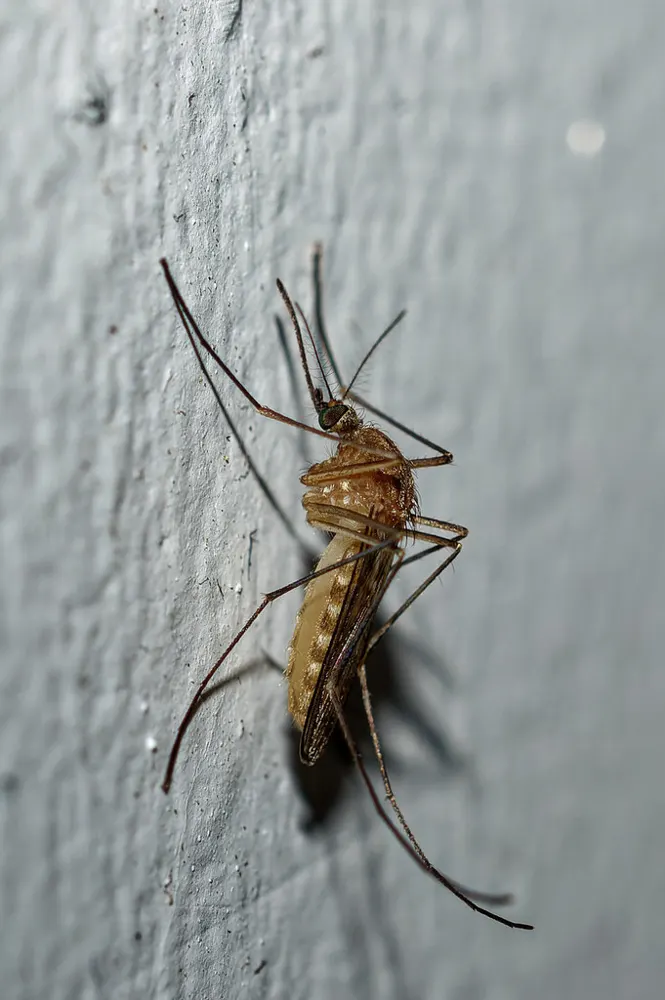
Check these features
- Plain light brown to tan mosquito with no bright white markings
- Pale and brown bands across the top of the abdomen
- No white bands on the legs
- Males are a little smaller and have bushy, feathery antennae
Bites and stings
Bites usually leave an itchy bump that fades in a few days. Females bite mainly in the evening and at night. Rarely, a bite passes on West Nile virus; most infected people never feel sick, and some get fever, headache, body aches, vomiting or rash usually 2 to 6 days later. A small number, mostly older adults and people with weakened immune systems or certain chronic conditions, develop serious brain or nerve illness. See a doctor for fever with headache or body aches during mosquito season. Get emergency care, or call 911, for a stiff neck, confusion, severe weakness, trouble breathing or swelling of the face or throat.
What to do
- Wash an itchy bite with soap and water and avoid scratching.
- Watch for fever, headache or body aches in the weeks after mosquito bites in summer and fall, and see a doctor if they appear, especially if you are older or have a weakened immune system.
- Find and empty standing water around the house, and repair window and door screens.
- Use an EPA-registered insect repellent and wear long sleeves and pants at dusk and in the evening.
Look-alikes
Why it came inside
House mosquitoes breed in stagnant, dirty water near homes, such as catch basins, clogged gutters, buckets, birdbaths and septic seepage, and come in through open doors and torn screens in the evening. In fall, mated females look for sheltered spots like basements, crawlspaces and culverts to spend the winter.
Keep it out
- Empty, scrub, turn over or cover buckets, planters, birdbaths, kiddie pools and tires at least once a week.
- Keep gutters clear and cover rain barrels tightly or with fine mesh.
- Treat water you cannot drain, such as ornamental ponds or rain barrels not used for drinking, with mosquito dunks, following the label.
- Keep window and door screens in good repair and doors closed, including the garage door.
What helps
Links go to Amazon search results so you can compare current options. As an Amazon Associate I earn from qualifying purchases. Always follow the product label.
Look for an EPA-registered repellent with DEET, picaridin, IR3535 or oil of lemon eucalyptus, and follow the label, especially for children.
See options on AmazonPatches or replaces torn window and door screens, one of the most common ways insects get in.
See options on AmazonKill mosquito larvae in standing water you can't drain, like rain barrels and ponds. Follow the label.
See options on AmazonCloses the gap under an exterior door. If you can see daylight under the door, bugs can get in.
See options on AmazonSeals the gaps around doors and windows that let in drafts and bugs alike.
See options on AmazonSources
- CDC
- CDC
- University of Florida IFAS Extension
- Ohio State University Extension
- CDC
- Rutgers University Center for Vector Biology
Checked October 18, 2026. Rating backed by 4 sources. How we rate danger.