
House fly
House flies do not bite, but they land on garbage and animal waste and can carry germs to your food, so keep them off kitchen surfaces.
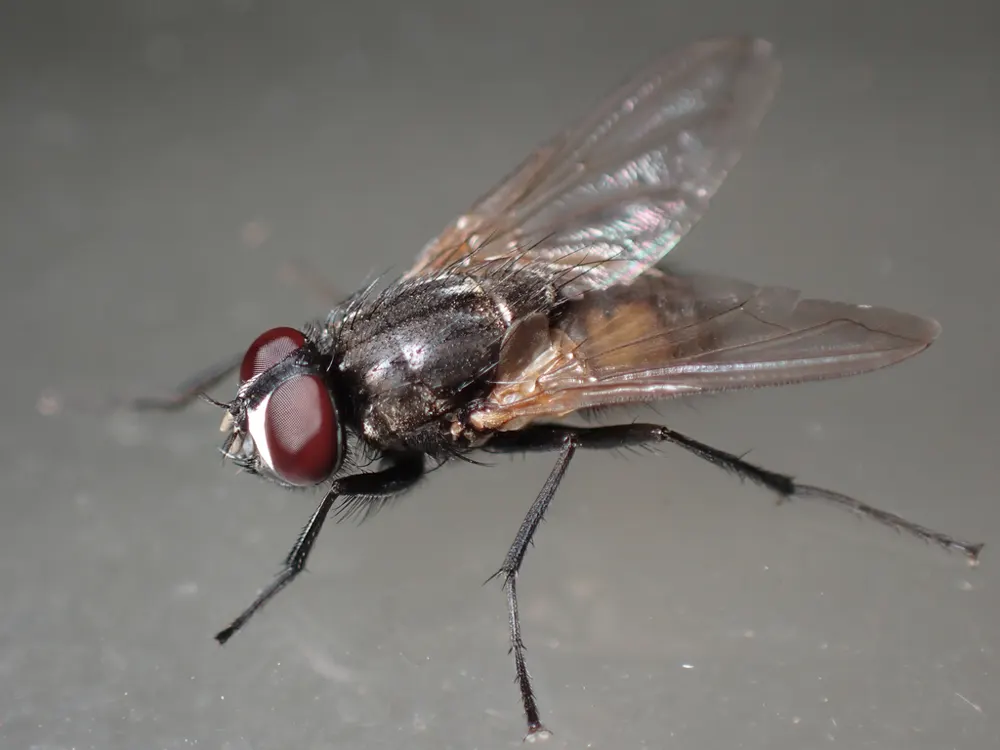
Check these features
- Medium-sized dull gray fly
- Four thin black stripes running lengthwise on the back, just behind the head
- Large reddish-brown eyes
- Grayish or yellowish abdomen with a dark center line
- Wings held apart in a slight V at rest, not overlapping
Bites and stings
Does not bite people. The concern is germs: flies that have walked on garbage or animal waste can leave bacteria on food and counters. Throw out food flies have been crawling on for a long time, and wash surfaces they land on.
What to do
- Swat or trap flies indoors and cover any food that is out.
- Wash counters, tables and dishes flies have landed on with hot soapy water.
- Find and remove what is attracting or breeding them: overflowing trash, pet waste, compost, spoiled produce, or a dead animal.
- Use sticky fly traps or an indoor light trap placed well away from food prep areas, following the product label.
Look-alikes
Why it came inside
Adults fly in through open doors and torn screens, drawn by food smells, garbage and pet waste. They breed in moist decaying material such as garbage, compost, animal manure and spilled pet food, usually outdoors.
Keep it out
- Keep window and door screens in good repair and doors closed.
- Use trash cans with tight-fitting lids, bag garbage, and empty cans at least weekly.
- Pick up pet waste in the yard promptly and keep compost away from doors.
- Clean up spilled pet food and rinse recycling before storing it.
What helps
Links go to Amazon search results so you can compare current options. As an Amazon Associate I earn from qualifying purchases. Always follow the product label.
Patches or replaces torn window and door screens, one of the most common ways insects get in.
See options on AmazonCloses the gap under an exterior door. If you can see daylight under the door, bugs can get in.
See options on AmazonFlat glue traps set along walls and in corners show what is moving through and where. Place them where pets and children can't reach.
See options on AmazonEnclosed baits work slowly as insects carry the bait back to where they hide. Don't spray near the baits, and follow the label.
See options on AmazonSources
- University of Florida IFAS Extension (EDIS)
- University of Minnesota Extension
- University of Maine Cooperative Extension
- Connecticut Agricultural Experiment Station (cluster fly comparison)
Checked October 18, 2026. Rating backed by 3 sources. How we rate danger.