
Brown marmorated stink bug
It does not bite or spread disease; it just smells bad when crushed and can show up indoors in large numbers.
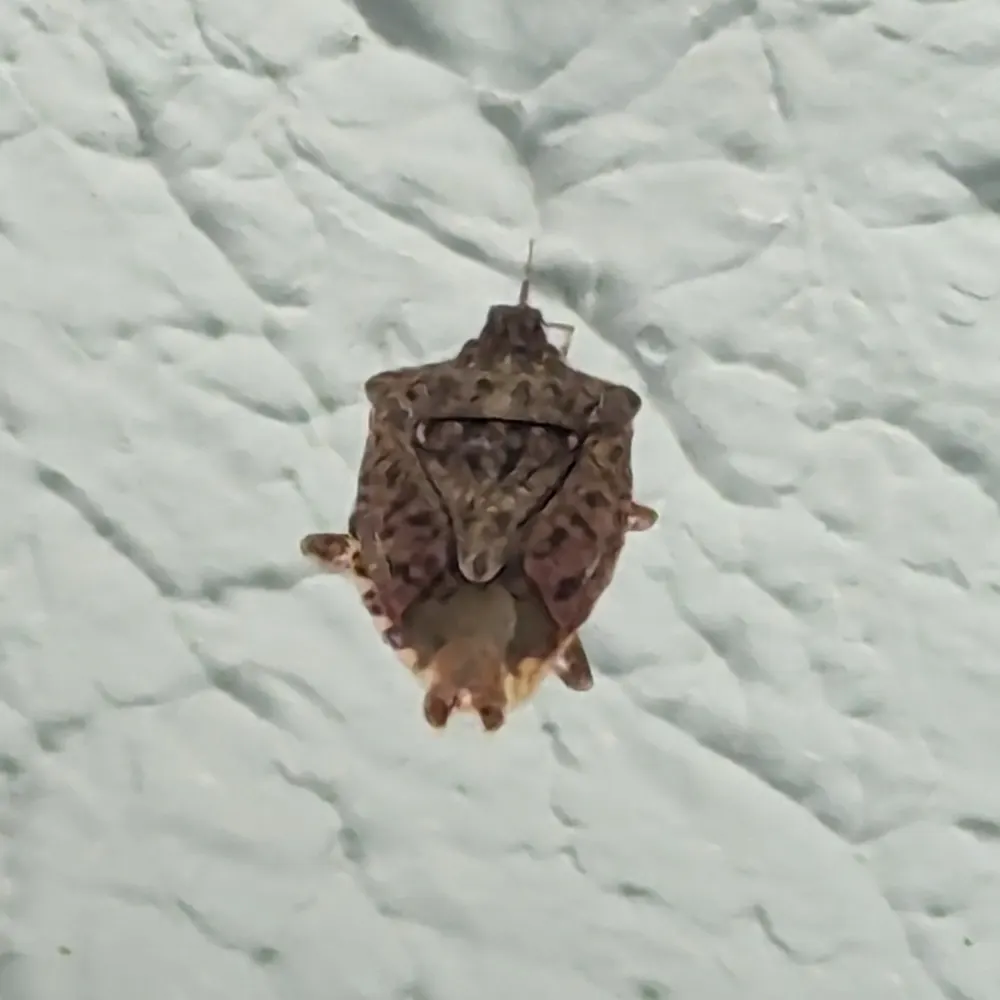
Check these features
- Shield-shaped, mottled brown to gray-brown bug
- Antennae with alternating light and dark bands (look for a pale band near the tip)
- Edges of the abdomen, sticking out past the wings, banded light and dark
- Smooth, rounded shoulders with no spines or teeth
- Gives off a strong odor when handled or crushed
Bites and stings
Does not bite people.
What to do
- Vacuum the bugs up gently or sweep them into a bag, taking care not to crush them, which releases the smell.
- Seal the bag or empty the vacuum right away and put it in the outdoor trash; a vacuum may smell for a while afterward.
- Find and seal the gaps they are using, such as around window air conditioners, pipes, wires, and window frames.
- Skip indoor sprays and foggers; bugs that die inside walls can smell and attract carpet beetles.
Look-alikes
Why it came inside
In fall the adults hunt for protected places to wait out winter and gather on the sunny sides of buildings, then crawl through gaps into attics and walls. Some wander into living space on warm winter or spring days.
Keep it out
- In late summer, caulk cracks around windows, doors, siding, pipes and chimneys.
- Keep window screens and door sweeps tight and in good repair.
- Cover attic and crawl space vents with fine screen mesh.
- Remove window air conditioners before fall or seal around them.
What helps
Links go to Amazon search results so you can compare current options. As an Amazon Associate I earn from qualifying purchases. Always follow the product label.
Lets you remove bugs, webs and egg sacs without touching them. Empty the bag or canister outside right away.
See options on AmazonSilicone or siliconized acrylic caulk closes cracks around windows, pipes and baseboards. Bigger gaps need foam backer rod or expanding foam first.
See options on AmazonCloses the gap under an exterior door. If you can see daylight under the door, bugs can get in.
See options on AmazonPatches or replaces torn window and door screens, one of the most common ways insects get in.
See options on AmazonSeals the gaps around doors and windows that let in drafts and bugs alike.
See options on AmazonSources
- Washington State University Extension (PestSense)
- Utah State University Extension
- UConn Home & Garden Education Center
- Penn State Extension (for the seed bug comparison)
Checked October 18, 2026. Rating backed by 2 sources. How we rate danger.