
Webbing clothes moth
Clothes moths do not bite or harm people; their caterpillars eat holes in wool, fur, feathers and other animal fibers.
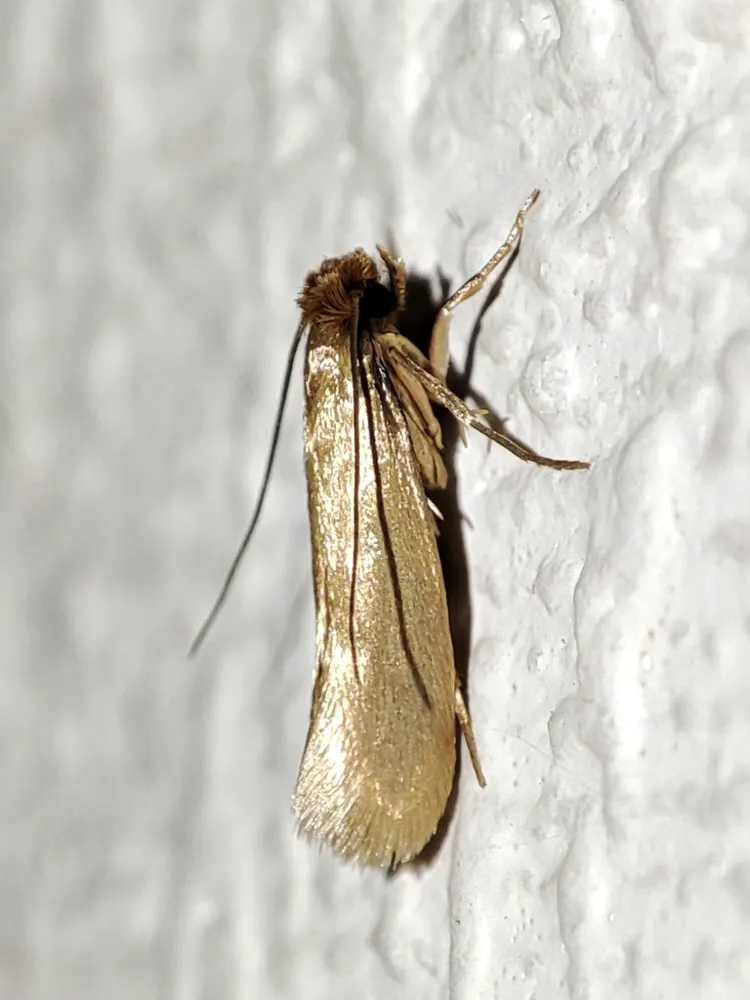
Check these features
- Very small moth with shiny, plain golden-buff wings and no spots
- Tuft of reddish-gold hairs on top of the head
- Hides from light and tends to scurry or flutter in dark closets rather than fly to lamps
- Caterpillar is creamy white with a brown head and spins silky tunnels or mats on the fabric
- Irregular holes or grazed patches in wool, often under collars, cuffs or under furniture on rugs
Bites and stings
Does not bite people.
What to do
- Check wool, cashmere, fur, felt and feather items for holes, silk tunnels and tiny droppings, especially in dark, undisturbed spots.
- Wash in hot water or dry clean infested items; for things that cannot be washed, seal them in a plastic bag and freeze for two weeks, then let them warm up in the bag.
- Vacuum closets, rug edges, under furniture, baseboards and vents thoroughly, then empty the vacuum outside.
- Use pheromone moth traps to monitor for male moths and find hot spots; they do not end an infestation alone.
- Never spray pesticides on clothing or bedding; for large rugs or heavy infestations, call a professional.
Look-alikes
Why it came inside
It is an indoor insect that lives where it can find animal fibers: wool clothing, rugs, felt, fur, feathers, pet hair under baseboards and in vents, and old wasp or bird nests in attics. It usually spreads on infested secondhand items or stored clothing.
Keep it out
- Clean wool and other animal-fiber clothing before storing it; body oils and food stains attract the larvae.
- Store out-of-season woolens in airtight containers or sealed garment bags.
- Treat cedar as a light help only: it protects items that are already clean and moth-free but does not kill an infestation.
- Vacuum lint and pet hair regularly, and inspect secondhand wool rugs, clothing and furniture before bringing them in.
What helps
Links go to Amazon search results so you can compare current options. As an Amazon Associate I earn from qualifying purchases. Always follow the product label.
Catch male moths and show whether you have a problem. They help you monitor, but won't end an infestation on their own.
See options on AmazonZippered bags keep clothes moths and carpet beetles away from stored wool. Clean clothes before storing them.
See options on AmazonLets you remove bugs, webs and egg sacs without touching them. Empty the bag or canister outside right away.
See options on AmazonFlat glue traps set along walls and in corners show what is moving through and where. Place them where pets and children can't reach.
See options on AmazonSources
- University of Minnesota Extension
- University of Florida IFAS Extension (EDIS)
- Rutgers NJAES Cooperative Extension
- Penn State Extension
Checked October 18, 2026. Rating backed by 3 sources. How we rate danger.