
Western conifer seed bug
This big, slow bug looks alarming but does not bite people, spread disease or damage the house; it may give off a piney smell if handled.
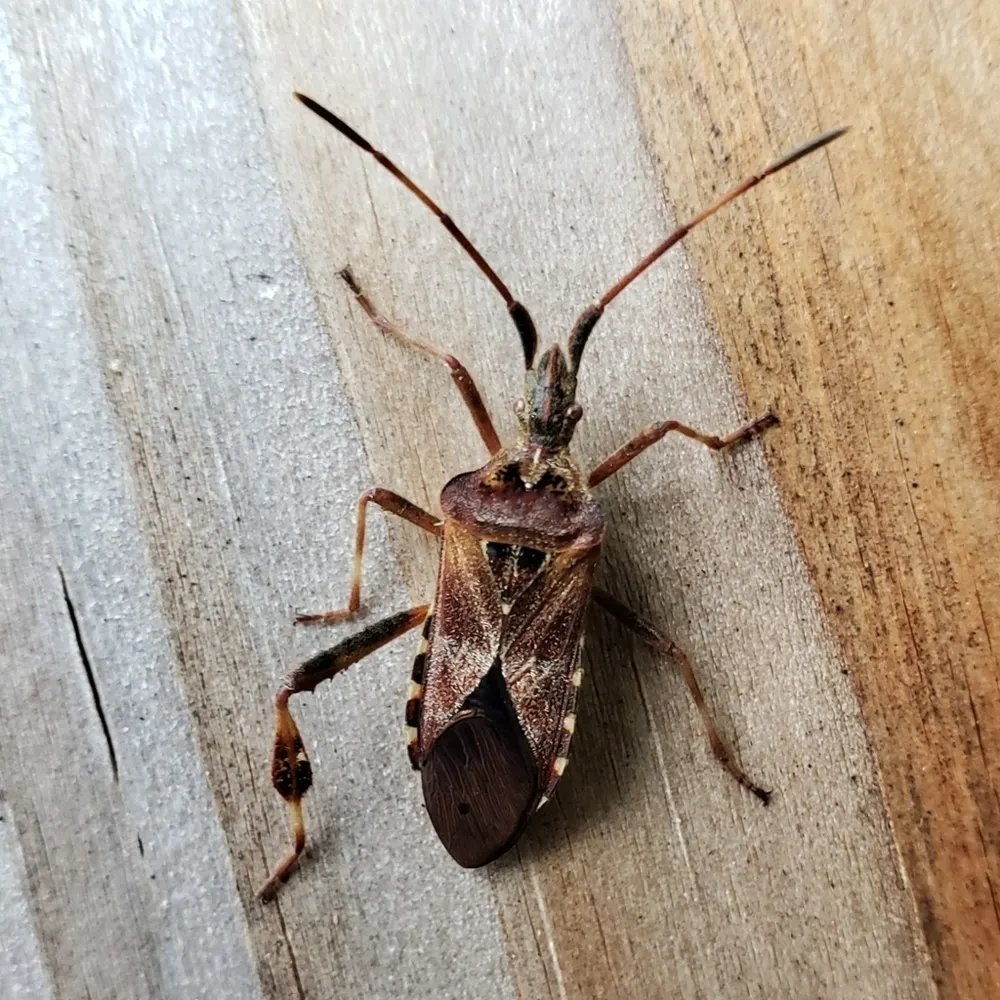
Check these features
- Long, narrow reddish-brown to dark brown bug
- Back legs have a flat, leaf-shaped flare partway down
- Thin zigzag white line across the middle of the back
- Yellow-orange and black patches on the abdomen, mostly seen when it flies
- Slow-moving; buzzes loudly when it flies
Bites and stings
Does not bite people. Only one bite has ever been recorded, and it caused brief itching and redness.
What to do
- Pick it up with a tissue, catch it in a cup, or vacuum it up; it is slow and easy to catch.
- Release or dispose of it outdoors, or empty the vacuum right away.
- Skip indoor sprays; they are not needed.
- Check for gaps around window frames, soffits and vents, where they usually get in.
Look-alikes
Why it came inside
Adults spend the winter in sheltered places and crawl under siding and through small gaps into homes in fall, especially homes near pines and other conifers. They do not breed indoors.
Keep it out
- Before September, replace loose or torn screens and caulk gaps around window and door frames.
- Seal cracks behind chimneys and under fascia boards and soffits.
- Screen attic, wall and chimney vents.
- Add weatherstripping or door sweeps to doors that show light.
What helps
Links go to Amazon search results so you can compare current options. As an Amazon Associate I earn from qualifying purchases. Always follow the product label.
Lets you remove bugs, webs and egg sacs without touching them. Empty the bag or canister outside right away.
See options on AmazonA long-handled catcher moves a spider or insect outside without you having to touch it.
See options on AmazonSilicone or siliconized acrylic caulk closes cracks around windows, pipes and baseboards. Bigger gaps need foam backer rod or expanding foam first.
See options on AmazonPatches or replaces torn window and door screens, one of the most common ways insects get in.
See options on AmazonSeals the gaps around doors and windows that let in drafts and bugs alike.
See options on AmazonCloses the gap under an exterior door. If you can see daylight under the door, bugs can get in.
See options on AmazonSources
- Colorado State University Extension
- Montana State University Extension Urban IPM
- Penn State Extension
- Ohio State University Extension, Buckeye Yard & Garden onLine
Checked October 18, 2026. Rating backed by 3 sources. How we rate danger.