
Asian lady beetle
It can give a small pinching bite and leaves a smelly yellow stain when disturbed, and swarms indoors can set off allergies in some people, but it carries no disease.
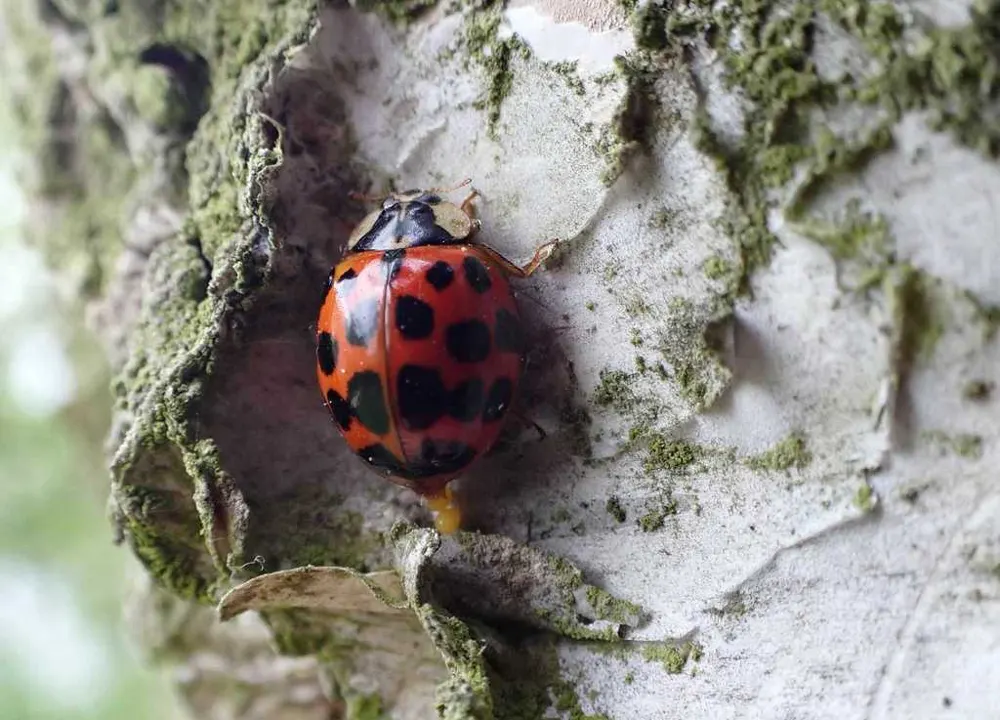
Check these features
- Rounded, domed oval beetle shaped like a typical ladybug
- Color ranges from pale yellow-orange to deep red, with anywhere from zero to about 18 black spots; some are black with red spots
- White area just behind the head with a black mark shaped like an M or W (depending on which way you look)
- Gathers in groups on sunny walls and windows in fall
Bites and stings
It may give a small pinch that can sting a little and occasionally breaks the skin on tender areas. Wash the spot with soap and water. Some people get itchy skin from the yellow fluid, and people with allergies or asthma may notice symptoms when many beetles are indoors. Get medical care for wheezing, trouble breathing, or swelling of the face; call 911 if breathing is hard.
What to do
- Vacuum the beetles up instead of sweeping or crushing them, which makes them release a smelly yellow fluid that stains.
- Empty or seal the vacuum bag right away and take it outside so beetles do not crawl back out or start to smell.
- Look for where they are getting in, starting in the room with the most beetles: gaps around window frames, baseboards, light fixtures and ceiling fans.
- Plan to seal outside cracks before next fall; indoor sprays and foggers do not give lasting relief.
Look-alikes
Why it came inside
In fall the adults look for a sheltered place to spend the winter and gather on sunny south- and west-facing walls, then slip through gaps into attics and wall spaces. Warmth from the house draws some of them into rooms, and they do not breed indoors.
Keep it out
- Before late September, caulk cracks around windows, doors, siding, pipes and chimneys.
- Repair torn window and door screens and add weatherstripping or door sweeps where light shows.
- Cover attic, soffit and exhaust vents with fine screen mesh.
- Do not spray inside wall voids; dead beetles left there can attract carpet beetles.
What helps
Links go to Amazon search results so you can compare current options. As an Amazon Associate I earn from qualifying purchases. Always follow the product label.
Lets you remove bugs, webs and egg sacs without touching them. Empty the bag or canister outside right away.
See options on AmazonSilicone or siliconized acrylic caulk closes cracks around windows, pipes and baseboards. Bigger gaps need foam backer rod or expanding foam first.
See options on AmazonSeals the gaps around doors and windows that let in drafts and bugs alike.
See options on AmazonCloses the gap under an exterior door. If you can see daylight under the door, bugs can get in.
See options on AmazonPatches or replaces torn window and door screens, one of the most common ways insects get in.
See options on AmazonSources
- Penn State Extension
- Clemson Cooperative Extension Home & Garden Information Center
- University of Minnesota Extension
- Washington State University Extension (PestSense)
Checked October 18, 2026. Rating backed by 4 sources. How we rate danger.