
Cluster fly
Cluster flies are a slow, harmless fall and winter nuisance; they do not bite, breed indoors or carry diseases that matter to people.
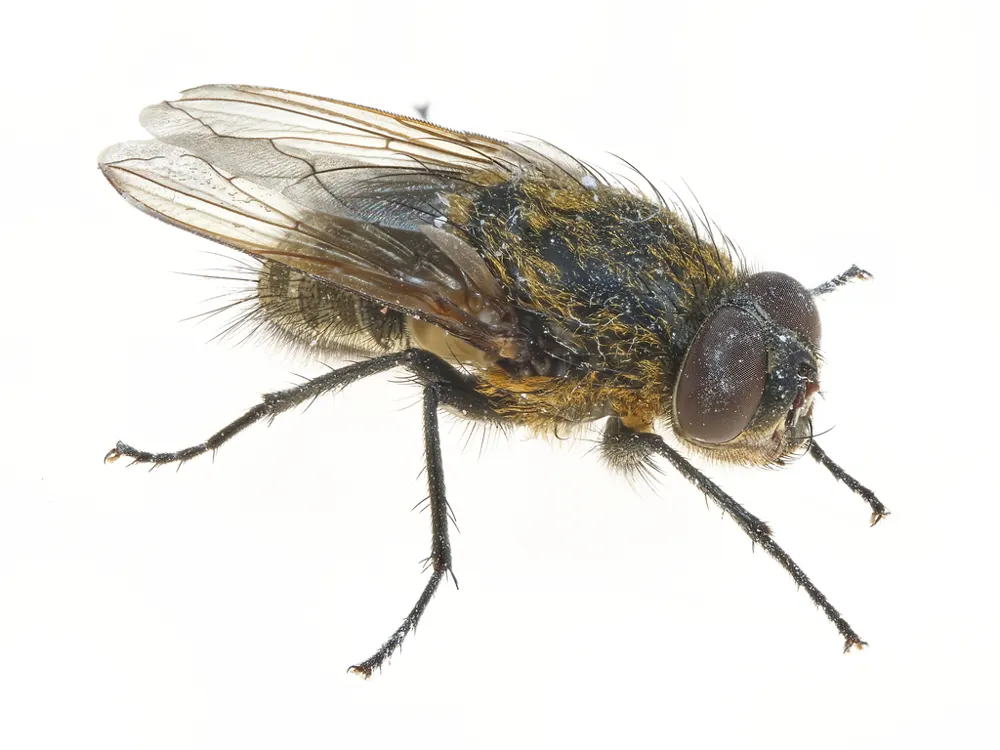
Check these features
- Dark gray, somewhat larger and more sluggish than a house fly
- Short, crinkly golden hairs on the back and sides of the thorax (may rub off on old flies)
- Wings fold flat over each other on the back at rest, like closed scissors
- Checkered gray pattern on the abdomen
- Gathers at sunny windows in fall and on warm winter days; a swatted fly leaves a greasy spot
Bites and stings
Does not bite people.
What to do
- Vacuum up or swat the flies; they are slow and easy to catch.
- Empty the vacuum outdoors right away so live flies do not crawl back out.
- Look for where they enter rooms: window and door trim, baseboards, ceiling lights and exhaust fans, and seal those gaps.
- Do not use dusts or sprays inside wall voids or the attic; piles of dead flies can feed carpet beetles that later attack wool and stored goods.
Look-alikes
Why it came inside
Maggots grow outdoors as parasites of earthworms in lawns and fields. In late summer and fall the adults look for a place to spend the winter, gather on warm, sunny walls, and slip under siding and eaves into attics and walls, then wander into rooms on warm days.
Keep it out
- By late August, caulk cracks around windows, doors, siding, utility pipes, chimneys and fascia, focusing on sunny and upper parts of the house.
- Screen attic and soffit vents and repair damaged window screens.
- Add weatherstripping and door sweeps where light shows around doors.
- Seal gaps around indoor light fixtures and exhaust fans to keep flies in the walls from reaching rooms.
What helps
Links go to Amazon search results so you can compare current options. As an Amazon Associate I earn from qualifying purchases. Always follow the product label.
Lets you remove bugs, webs and egg sacs without touching them. Empty the bag or canister outside right away.
See options on AmazonSilicone or siliconized acrylic caulk closes cracks around windows, pipes and baseboards. Bigger gaps need foam backer rod or expanding foam first.
See options on AmazonPatches or replaces torn window and door screens, one of the most common ways insects get in.
See options on AmazonSeals the gaps around doors and windows that let in drafts and bugs alike.
See options on AmazonCloses the gap under an exterior door. If you can see daylight under the door, bugs can get in.
See options on AmazonSources
- Virginia Cooperative Extension
- Penn State Extension
- University of New Hampshire Cooperative Extension
- Connecticut Agricultural Experiment Station
- Cornell Cooperative Extension Nassau County
- Maine Department of Agriculture, Conservation and Forestry
Checked October 18, 2026. Rating backed by 4 sources. How we rate danger.