
Eastern carpenter bee
The males that buzz around your face cannot sting at all, and females almost never sting unless handled; the bigger worry is the holes they bore in wood.
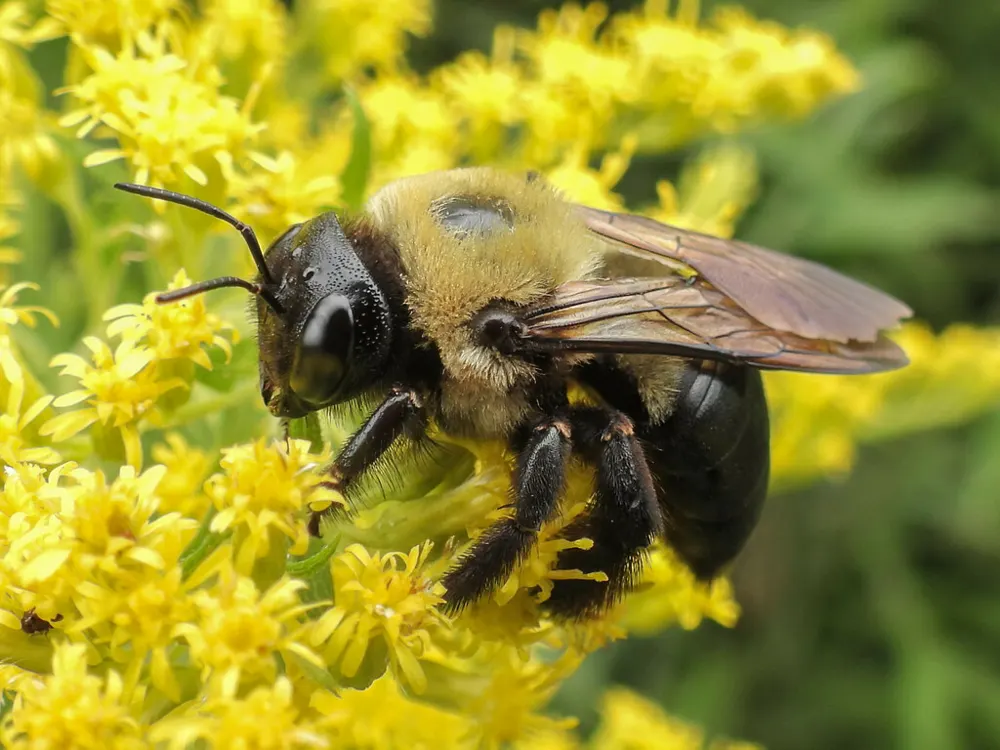
Check these features
- Large, bumble-bee-sized bee with a bare, shiny black top of the abdomen
- Fuzzy thorax with yellow hairs
- Males have a yellow or white patch on the face; females have an all-black face
- Perfectly round hole about 1/2 inch wide drilled into wood, often with coarse sawdust below
- Males hover and dart at people near the nest in spring
Bites and stings
Males cannot sting. Females can sting but seldom do unless picked up or trapped against skin. A sting causes sharp pain and local swelling like other bee stings; wash the area and use a cold pack. Call 911 right away for trouble breathing, swelling of the face or throat, hives all over or fainting, which are signs of a severe allergic reaction.
What to do
- Stay calm when a carpenter bee hovers near you; it is almost always a stingless male guarding the area, so you can walk past it.
- Look for round 1/2 inch holes and sawdust on the undersides of eaves, decks, railings and trim to find active nests.
- If you treat active holes, use a dust product labeled for carpenter bees applied into the holes in the evening, wear protective gear and follow the label; or hire a licensed pro, especially for high eaves.
- Wait until the bees have had time to pass through, then plug holes with wood putty, wooden dowels or sealant and repaint.
- Anyone with a sting allergy should let someone else do the work and keep prescribed epinephrine on hand.
Look-alikes
Why it came inside
Carpenter bees rarely come into living space; they bore into bare or weathered wood on eaves, fascia boards, decks, railings, porch ceilings, windowsills and doors, and a few can wander into an open garage or shed.
Keep it out
- Keep exposed wood painted or coated with polyurethane; stain alone does not stop them.
- Check painted surfaces each year and touch up worn or bare spots.
- Fill old holes in fall so new bees cannot reuse and lengthen the tunnels.
- Consider vinyl, aluminum or other non-wood materials for trim that gets hit year after year.
What helps
Links go to Amazon search results so you can compare current options. As an Amazon Associate I earn from qualifying purchases. Always follow the product label.
Silicone or siliconized acrylic caulk closes cracks around windows, pipes and baseboards. Bigger gaps need foam backer rod or expanding foam first.
See options on AmazonSources
- Penn State Extension
- Ohio State University Extension (Ohioline HYG-2074)
- Kansas State University Research and Extension (MF2946)
Checked October 18, 2026. Rating backed by 3 sources. How we rate danger.