
European paper wasp
It can sting if you bump its nest, and the sting hurts, but it is usually calm and only dangerous for people with a sting allergy.
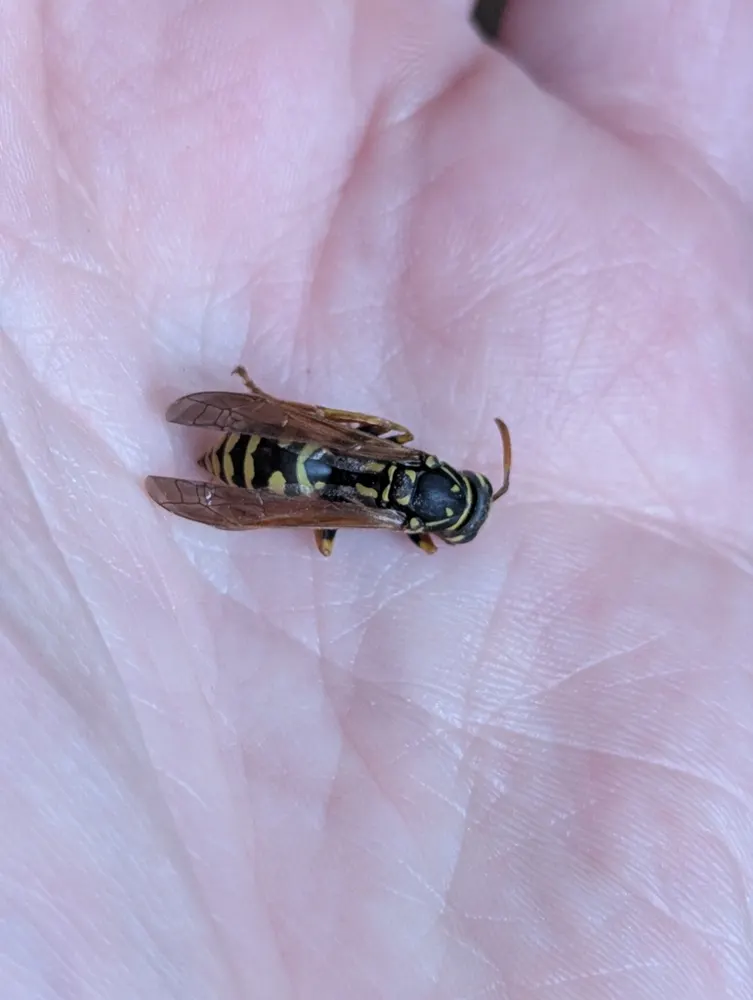
Check these features
- Black body with bright yellow bands and spots, easy to mistake for a yellowjacket
- Antennae are orange toward the tips
- Slim body with a thin, pinched waist
- Long hind legs that hang down below the body when it flies
- Nest is a single open comb of paper cells shaped like an upside-down umbrella, with no paper cover
Bites and stings
The sting causes sharp pain, redness, itching and swelling at the spot that usually fades within a day or two. Wash it with soap and water and use a cold pack. Get medical care for many stings, a sting in the mouth or throat, or swelling that keeps spreading. Call 911 right away for trouble breathing or swallowing, swelling of the face, lips or throat, hives all over, dizziness or fainting, which are signs of a severe allergic reaction.
What to do
- If a single wasp is indoors, stay calm and do not swat it; open a window or trap it under a cup or bug catcher and release it outside.
- If you are stung, wash the spot with soap and water and apply a cold pack; call 911 for any trouble breathing or swelling of the face or throat.
- Look for nests under eaves, in light fixtures, grills, mailboxes, deck railings and other sheltered spots outside.
- Leave nests that are out of the way alone; they are abandoned at the end of the season.
- If a nest is where people walk or work, have a professional remove it, or use a product labeled for wasps and hornets at night and follow the label exactly.
- Anyone with a known sting allergy should stay away from nest removal and keep any prescribed epinephrine on hand.
Look-alikes
Why it came inside
Mated queens look for sheltered spots to spend the winter, such as behind siding, in wall voids and in attics, and some wander into living spaces on warm days. A wasp found indoors in winter does not mean there is an active nest.
Keep it out
- Caulk cracks in soffits, eaves and siding and repair holes in walls.
- Screen attic vents and louvers and keep window and door screens tight.
- Check grills, birdhouses, outdoor fixtures and seldom-used equipment in early spring, when a new nest has only the queen.
- Knock down small new nests early in spring while wearing protective clothing, if no one in the home is allergic.
What helps
Links go to Amazon search results so you can compare current options. As an Amazon Associate I earn from qualifying purchases. Always follow the product label.
Silicone or siliconized acrylic caulk closes cracks around windows, pipes and baseboards. Bigger gaps need foam backer rod or expanding foam first.
See options on AmazonPatches or replaces torn window and door screens, one of the most common ways insects get in.
See options on AmazonA long-handled catcher moves a spider or insect outside without you having to touch it.
See options on AmazonSources
- Penn State Extension
- Colorado State University, Agricultural Biology
- University of Kentucky Entomology (EF620)
- Washington State University Pestsense
- Oklahoma State University Extension
Checked October 18, 2026. Rating backed by 3 sources. How we rate danger.