
Brown dog tick
This tick mainly feeds on dogs and can breed indoors; it bites people less often, but in parts of the Southwest it spreads Rocky Mountain spotted fever, which can be deadly without prompt treatment.
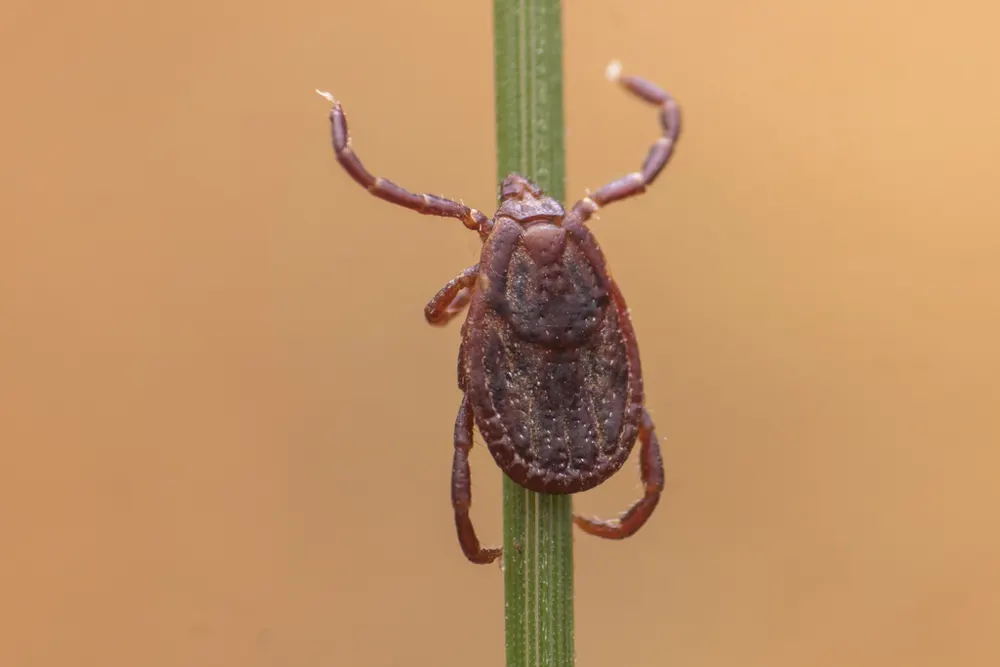
Check these features
- Plain reddish-brown, slightly elongated body with no white or silver markings
- Eight legs (six on the tiny larvae)
- Fed females swell and turn gray, about the size of a small raisin
- Often seen crawling up walls, along baseboards, behind curtains or on dog bedding
- Six-sided (hexagonal) base of the mouthparts, visible only with a magnifier
Bites and stings
Brown dog ticks prefer dogs and bite people mainly when an infestation is heavy. The bite is usually painless. In parts of the Southwest (especially Arizona) and along the Mexico border, these ticks can spread Rocky Mountain spotted fever, which causes fever, headache and rash and can become life-threatening if treatment is delayed. See a doctor right away for fever, headache or rash after a tick bite or after living with a tick-infested dog. Call 911 for trouble breathing, swelling of the face or throat, or other severe symptoms.
What to do
- If a tick is attached to a person, remove it right away: grip it as close to the skin as you can with clean fine-tipped tweezers and pull up with steady, even pressure without twisting or squeezing the body. Do not use heat, petroleum jelly or nail polish.
- Clean the bite and your hands with soap and water or rubbing alcohol, seal the tick in a bag or container, and note the date.
- Watch for fever, headache or rash over the following weeks and see a doctor promptly if they appear; mention the tick bite and any ticks on your dog.
- Take your dog to the veterinarian for tick treatment, and wash pet bedding and vacuum along baseboards, under furniture and behind curtains; indoor infestations can be hard to clear and may need a pest professional.
- For questions about a bite or symptoms, call Poison Help at 1-800-222-1222 (US, free, any hour). Call 911 for trouble breathing, swelling of the face or throat, or severe symptoms.
Look-alikes
Why it came inside
Unlike most ticks, the brown dog tick can live and breed entirely indoors. It usually arrives on a dog, and females then lay thousands of eggs in cracks around the home, kennel or dog run, so a few ticks can become a large infestation.
Keep it out
- Keep dogs on a year-round tick prevention product recommended by your veterinarian (some dog products are toxic to cats, so follow the label).
- Check dogs often, especially after boarding, kennels or dog parks, and remove ticks promptly.
- Seal cracks and gaps around baseboards, door frames and dog runs where ticks hide and lay eggs.
- Vacuum often and wash pet bedding regularly.
What helps
Links go to Amazon search results so you can compare current options. As an Amazon Associate I earn from qualifying purchases. Always follow the product label.
Grab the tick close to the skin and pull straight up with steady pressure.
See options on AmazonAsk your vet which product fits your pet. Never use a dog product on a cat.
See options on AmazonLets you remove bugs, webs and egg sacs without touching them. Empty the bag or canister outside right away.
See options on AmazonSilicone or siliconized acrylic caulk closes cracks around windows, pipes and baseboards. Bigger gaps need foam backer rod or expanding foam first.
See options on AmazonA 10x magnifier makes small features easier to check, like eye patterns, markings or the shield on a tick.
See options on AmazonSources
- CDC
- CDC
- Penn State Extension
- University of Maine Cooperative Extension
- CDC
- Oklahoma State University Extension
- University of Florida IFAS Extension (EENY-221)
Checked October 18, 2026. Rating backed by 4 sources. How we rate danger.