
Western blacklegged tick
This tick can spread Lyme disease and anaplasmosis, so remove any attached tick promptly and watch for a rash or fever over the next few weeks.
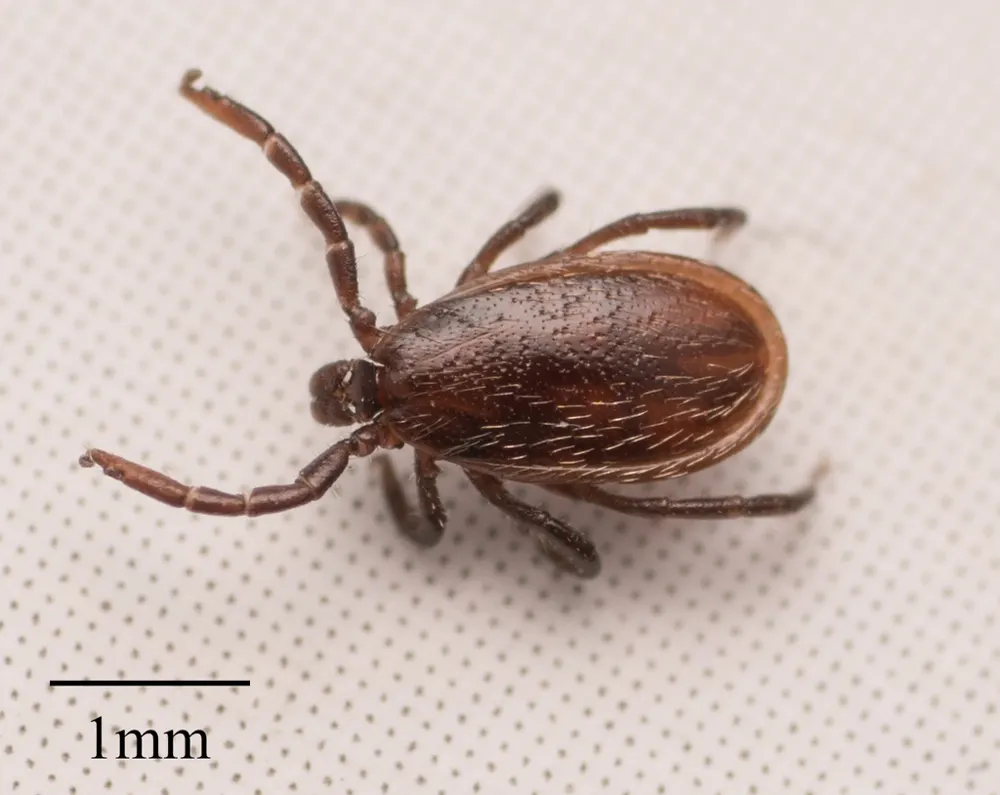
Check these features
- Very small, flat, teardrop-shaped tick with 8 legs (adults and nymphs)
- Adult female: reddish-orange rear body with a plain dark brownish-black shield covering the front half of the back
- Dark brownish-black to black legs
- No white, cream or silvery markings on the back
- Male is smaller, oval and dark brownish-black all over; nymphs are tiny with a dark shield and a pale, see-through body
Bites and stings
It attaches and feeds for days, and the bite is often not noticed, especially from the tiny nymph. Most bites cause only a small red bump, but an infected tick can pass on Lyme disease or anaplasmosis. A Lyme rash usually spreads slowly and can show up about 3 to 32 days after a bite, often with fever, chills, headache or tiredness; anaplasmosis usually starts 1 to 2 weeks after a bite with fever, chills, bad headache and muscle aches. See a doctor if you get a rash, fever or flu-like illness in the weeks after a tick bite, and tell them when and where you were bitten.
What to do
- If a tick is attached, remove it right away; do not wait for a doctor. Use clean, fine-tipped tweezers (or a tick removal tool), grip the tick as close to the skin as you can, and pull straight up with slow, steady, even pressure. Do not twist, jerk or squeeze the body, and skip petroleum jelly, nail polish, heat or matches.
- Wash the bite and your hands with soap and water, rubbing alcohol or hand sanitizer. Do not crush the tick with your fingers; seal it in a bag or container (note the date), wrap it tightly in tape, drop it in rubbing alcohol, or flush it. Then check the rest of your body, your children and your pets for more ticks.
- Watch for a rash, fever, chills, headache or body aches for the next several weeks. If any appear, see a doctor and mention the tick bite, the date and where you likely picked it up.
- For questions about a bite or a reaction, call Poison Help at 1-800-222-1222 (US, free, any hour). Call 911 for trouble breathing, swelling of the face or throat, or any severe symptoms.
- For a tick found crawling but not attached, pick it up with tape or tweezers and seal it in a bag. Testing the tick is not recommended for medical decisions, so do not wait on test results if you feel sick.
Look-alikes
Why it came inside
It does not live indoors; it rides in on people, pets, clothing or gear after time in woods, brush or grassy trail edges. Ticks that fall off can turn up on bedding, floors or furniture, and fed nymphs that drop off overnight are sometimes spotted on pillows.
Keep it out
- Use an EPA-registered insect repellent on skin or clothing, and consider permethrin-treated clothing and gear (follow the label).
- Wear long sleeves and long pants tucked into socks in wooded or brushy areas, and stay in the middle of trails.
- After coming inside, shower within two hours, do a full-body tick check, and tumble-dry outdoor clothes on high heat to kill hidden ticks.
- Check pets after time outdoors and ask your vet about tick control products.
- Clear leaf litter and brush near the house and put a wood-chip or gravel strip between the lawn and wooded areas.
What helps
Links go to Amazon search results so you can compare current options. As an Amazon Associate I earn from qualifying purchases. Always follow the product label.
Grab the tick close to the skin and pull straight up with steady pressure.
See options on AmazonLook for an EPA-registered repellent with DEET, picaridin, IR3535 or oil of lemon eucalyptus, and follow the label, especially for children.
See options on AmazonAsk your vet which product fits your pet. Never use a dog product on a cat.
See options on AmazonA 10x magnifier makes small features easier to check, like eye patterns, markings or the shield on a tick.
See options on AmazonSources
- CDC
- CDC
- University of California Statewide IPM Program (UC ANR)
- CDC
- University of California Statewide IPM Program (UC ANR)
- CDC
- CDC
- Utah State University Extension
- Montana State University Extension
- Texas A&M AgriLife Extension (The Tick App)
- Texas A&M AgriLife Extension (The Tick App)
- Texas A&M AgriLife Extension (The Tick App)
- Oklahoma State University Extension
Checked October 18, 2026. Rating backed by 4 sources. How we rate danger.