
Blacklegged tick
This tick can spread Lyme disease and several other serious infections, so remove it promptly and watch for rash or fever in the weeks after a bite.
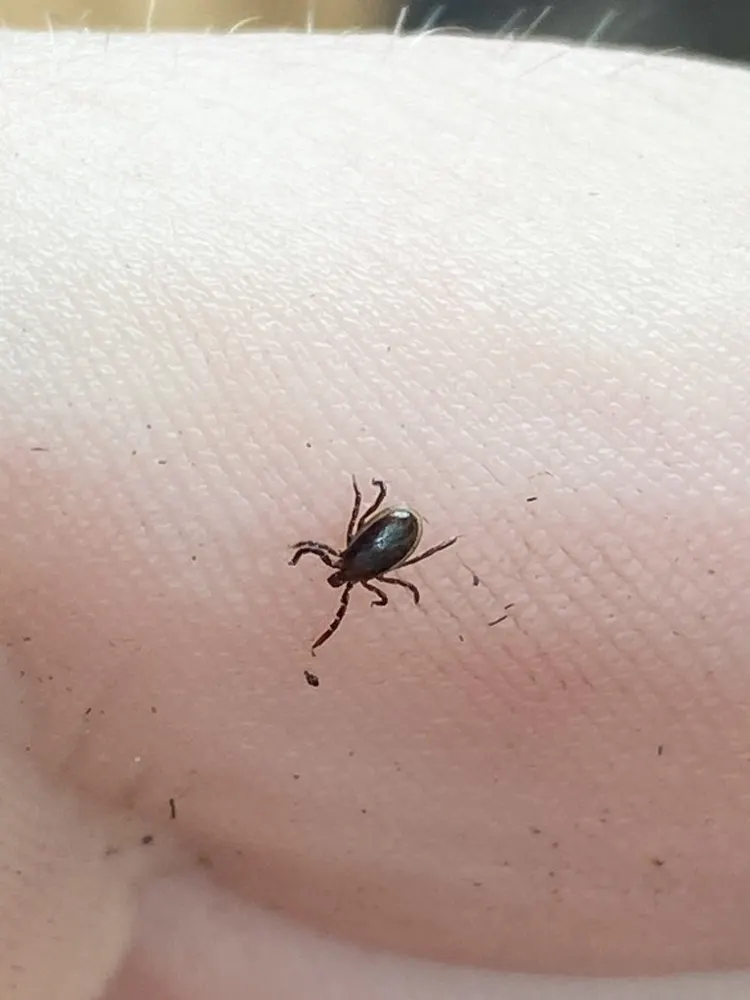
Check these features
- Very small, flat, teardrop-shaped body with eight dark legs (six on larvae)
- Adult female has an orange-red rear body with a solid dark brown or black shield behind the head
- Adult male is dark brown all over, with the shield covering the whole back
- No white or silver markings on the shield
- Long, forward-pointing mouthparts visible from above
Bites and stings
The bite is usually painless, so the tick is often found already attached. The main concern is not the bite itself but infections passed while it feeds, such as Lyme disease. See a doctor if you get a rash, fever, chills or body aches in the days to weeks after a bite, and tell them about the tick bite, when it happened and where you likely picked it up. Call 911 for trouble breathing, swelling of the face or throat, or other severe symptoms.
What to do
- If the tick is attached, remove it right away: grip it as close to the skin as you can with clean fine-tipped tweezers and pull up with steady, even pressure without twisting or squeezing the body. Do not use heat, petroleum jelly or nail polish.
- Clean the bite and your hands with soap and water or rubbing alcohol, then check the rest of your body, children and pets for more ticks.
- Put the tick in a sealed bag or container (or in rubbing alcohol) and write down the date of the bite in case a doctor asks.
- Watch for a rash or fever over the next several weeks and see a doctor if either appears.
- For questions about a bite or symptoms, call Poison Help at 1-800-222-1222 (US, free, any hour). Call 911 for trouble breathing, swelling of the face or throat, or severe symptoms.
Look-alikes
Why it came inside
Blacklegged ticks do not live or breed indoors. They ride in on people, pets, clothing or gear after time in wooded areas, leaf litter or shady yard edges, and may attach later.
Keep it out
- Use an EPA-registered insect repellent on skin and treat or buy permethrin-treated clothing for time in woods and tall grass, following the product label.
- Check your whole body, children, pets and gear after being outdoors, including in your own yard, and shower within two hours of coming inside.
- Tumble-dry outdoor clothes on high heat for at least 10 minutes to kill ticks riding on them.
- Keep leaf litter, brush and tall grass cleared near the house, and put a strip of wood chips or gravel between lawn and woods.
- Ask your veterinarian about tick prevention for dogs and cats.
What helps
Links go to Amazon search results so you can compare current options. As an Amazon Associate I earn from qualifying purchases. Always follow the product label.
Grab the tick close to the skin and pull straight up with steady pressure.
See options on AmazonLook for an EPA-registered repellent with DEET, picaridin, IR3535 or oil of lemon eucalyptus, and follow the label, especially for children.
See options on AmazonAsk your vet which product fits your pet. Never use a dog product on a cat.
See options on AmazonA 10x magnifier makes small features easier to check, like eye patterns, markings or the shield on a tick.
See options on AmazonSources
Checked October 18, 2026. Rating backed by 3 sources. How we rate danger.