
Bed bug
Bed bugs bite and can cause itchy welts and lost sleep, but they are not known to spread disease.
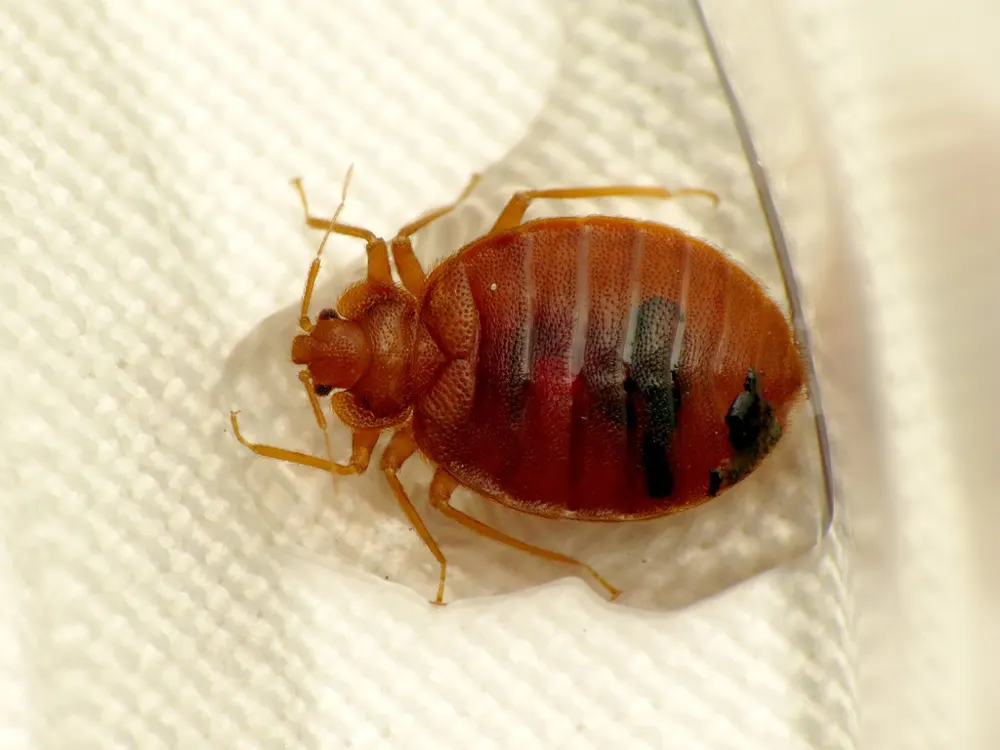
Check these features
- Flat, oval, wingless reddish-brown body when unfed
- Swollen, longer and redder right after feeding
- Six legs and short antennae
- Young bed bugs are pale, see-through or yellowish and hard to see until fed
- Signs nearby: dark rust-colored spots on sheets or mattress seams, shed skins, tiny white eggs, and a sweet, musty smell
Bites and stings
Bed bugs bite exposed skin at night while people sleep. Many people have no reaction. Others get small red, slightly swollen, itchy spots that may appear a day or more later, sometimes in a line or cluster. Scratching can lead to skin infection. See a doctor if bites look infected or if you have a larger allergic reaction; call 911 for trouble breathing or swelling of the face or throat.
What to do
- Catch one if you can (tape or a sealed bag works) and confirm it is a bed bug by comparing photos or showing it to your local extension office.
- Check mattress seams, box springs, bed frames, headboards and nearby furniture for bugs, shed skins, eggs and dark spots.
- Wash bedding and clothing that touched the floor, then dry on high heat; vacuum the mattress, bed frame, floors and cracks and seal the vacuum bag or contents in plastic before throwing it out.
- Put tested bed bug encasements on the mattress and box spring and leave them on for a year; place interceptors under bed legs to catch and monitor bugs.
- Bed bugs are hard to clear on your own. Renters should tell their landlord; consider a pest professional who uses integrated pest management. If you use any product, follow the label exactly.
Look-alikes
Why it came inside
Bed bugs live only indoors where people sleep or rest, feeding on human blood at night. They arrive on luggage, bags, clothing and used furniture or mattresses, and in apartments they can move between units through walls and hallways. A clean home can still get them.
Keep it out
- When traveling, check the bed and headboard and keep luggage off the bed and floor, on a rack or in the bathroom.
- Wash and heat-dry travel clothes when you get home.
- Inspect used furniture, mattresses and bed frames carefully before bringing them inside.
- Cut clutter around beds and seal cracks in baseboards and furniture to remove hiding places.
- Check sleeping areas regularly so a problem is caught early.
What helps
Links go to Amazon search results so you can compare current options. As an Amazon Associate I earn from qualifying purchases. Always follow the product label.
A zippered cover made for bed bugs traps any inside and takes away hiding spots in the seams.
See options on AmazonCups under the bed legs catch bed bugs climbing up or down and show whether you have them.
See options on AmazonLets you remove bugs, webs and egg sacs without touching them. Empty the bag or canister outside right away.
See options on AmazonSilicone or siliconized acrylic caulk closes cracks around windows, pipes and baseboards. Bigger gaps need foam backer rod or expanding foam first.
See options on AmazonA 10x magnifier makes small features easier to check, like eye patterns, markings or the shield on a tick.
See options on AmazonSources
Checked October 18, 2026. Rating backed by 2 sources. How we rate danger.