
Arizona bark scorpion
This is the most venomous scorpion in the US; a sting is very painful and can be dangerous for young children and older adults, so call Poison Help right away.
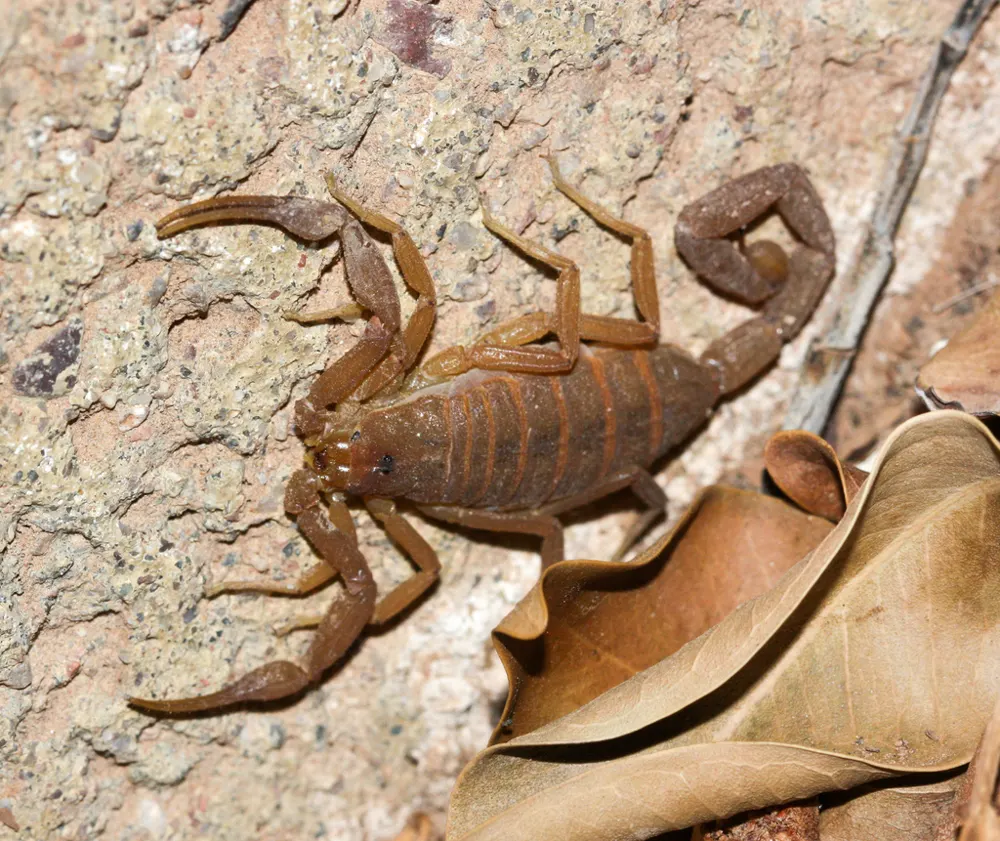
Check these features
- Slim, pale yellow to yellowish-tan body, sometimes with darker stripes or mottling
- Long, thin tail and slender pincers (much thinner than most other desert scorpions)
- Often rests with the tail curled to the side rather than arched over the back
- Climbs walls, trees and ceilings well and often hides in groups
- Glows bright greenish under a UV (black) light at night
Bites and stings
A sting causes immediate burning pain, usually with little swelling, then numbness or tingling that can spread, and sometimes muscle twitching. Young children can develop jerky movements, roving eyes, drooling, trouble swallowing or breathing, and vomiting, usually within 20 minutes to a few hours. Most healthy adults recover within one to three days, though numbness or tingling can last several days; deaths are extremely rare. Call Poison Help for any sting; get emergency care right away for a child, an older adult, anyone with high blood pressure, or any severe symptom.
What to do
- Move away from the scorpion, then wash the sting with soap and water and apply a cool compress (about 10 minutes on, 10 minutes off).
- Call Poison Help at 1-800-222-1222 (US, free, any hour) right away for advice on what to do next.
- Call 911 for trouble breathing, swelling of the face or throat, drooling or trouble swallowing, uncontrolled movements, or any sting in a young child.
- Keep a stung arm or leg still and supported and stay with the person.
- See a doctor if pain or numbness lasts more than about a week.
Look-alikes
Why it came inside
It shelters in hollow block walls, wall voids and gaps around pipes and outlets, and wanders inside at night hunting insects or after heat, flooding or disturbance; it can climb and fall into sinks and tubs. Nearly all scorpion stings reported to US poison centers happen in or around homes.
Keep it out
- Seal gaps around doors, windows, pipes and eaves with weatherstripping, door sweeps and caulk; cover weep holes with coarse mesh rather than sealing them.
- Keep firewood, rocks, debris and dense plants away from walls, and trim branches touching the roof.
- Shake out shoes, clothes and towels, keep towels off the floor, and pull beds slightly from walls.
- Check indoors and around the house at night with a UV flashlight.
- Teach children not to touch scorpions, and wear shoes outdoors at night.
What helps
Links go to Amazon search results so you can compare current options. As an Amazon Associate I earn from qualifying purchases. Always follow the product label.
Scorpions glow under ultraviolet light, which makes them much easier to spot at night.
See options on AmazonCloses the gap under an exterior door. If you can see daylight under the door, bugs can get in.
See options on AmazonSeals the gaps around doors and windows that let in drafts and bugs alike.
See options on AmazonSilicone or siliconized acrylic caulk closes cracks around windows, pipes and baseboards. Bigger gaps need foam backer rod or expanding foam first.
See options on AmazonPatches or replaces torn window and door screens, one of the most common ways insects get in.
See options on AmazonFlat glue traps set along walls and in corners show what is moving through and where. Place them where pets and children can't reach.
See options on AmazonA long-handled catcher moves a spider or insect outside without you having to touch it.
See options on AmazonSources
- University of Arizona Cooperative Extension
- Los Angeles County Agricultural Commissioner/Weights & Measures
- University of Arizona Cooperative Extension (ACIS)
Checked October 18, 2026. Rating backed by 2 sources. How we rate danger.