Zebra jumping spider
Harmless: this tiny black-and-white striped jumper on sunny windowsills does not harm people.
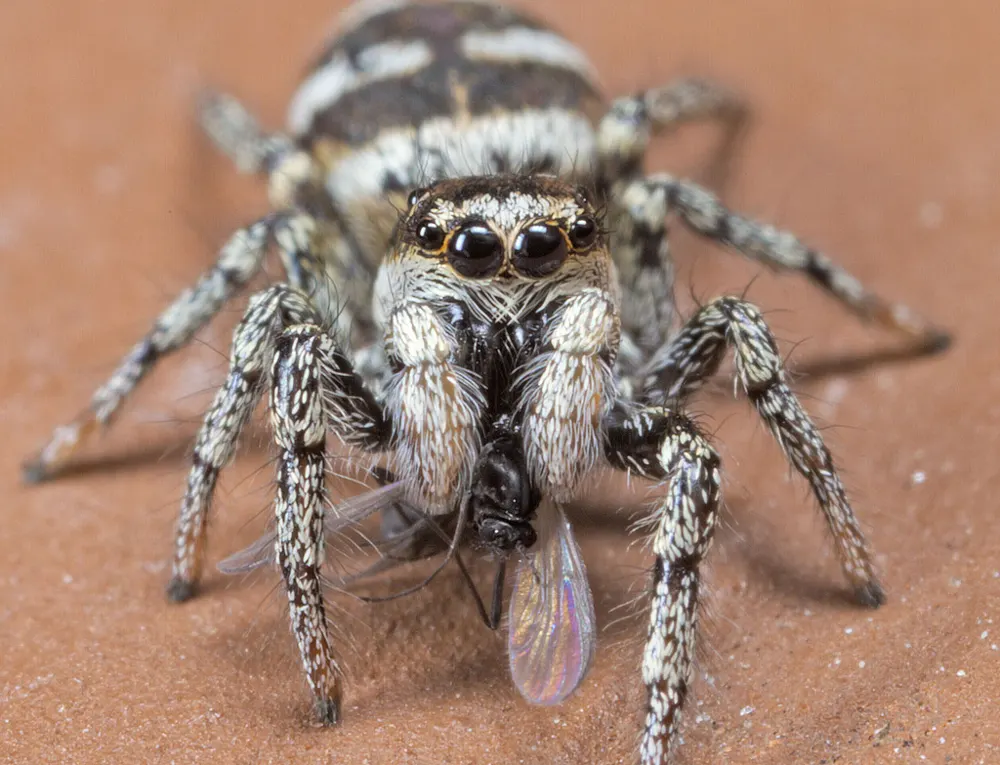
Check these features
- Small, compact black or dark brown body with bold white stripes and bands
- White band along the sides of the head and white hairs around the eyes
- Two very large forward-facing eyes
- Jerky, stop-and-go walking and short jumps
- Males have large dark jaws that stick forward
Bites and stings
Does not bite people in any meaningful way; it is too small and too shy.
What to do
- Nothing urgent: let it hop onto paper or into a cup and put it outside.
- Leave it be if you like; it catches flies and mosquitoes.
- Vacuum small silk retreats in window corners if you prefer.
Look-alikes
Why it came inside
It hunts on sun-warmed walls, fences and window frames and often wanders in through open or poorly screened windows while chasing small flies.
Keep it out
- Repair or replace torn window screens.
- Seal gaps around window frames with caulk.
- Fit door sweeps and weatherstripping on exterior doors.
What helps
Links go to Amazon search results so you can compare current options. As an Amazon Associate I earn from qualifying purchases. Always follow the product label.
Patches or replaces torn window and door screens, one of the most common ways insects get in.
See options on AmazonSilicone or siliconized acrylic caulk closes cracks around windows, pipes and baseboards. Bigger gaps need foam backer rod or expanding foam first.
See options on AmazonCloses the gap under an exterior door. If you can see daylight under the door, bugs can get in.
See options on AmazonSeals the gaps around doors and windows that let in drafts and bugs alike.
See options on AmazonA long-handled catcher moves a spider or insect outside without you having to touch it.
See options on AmazonA 10x magnifier makes small features easier to check, like eye patterns, markings or the shield on a tick.
See options on AmazonSources
- Penn State Extension
- University of Minnesota Extension
- University of Wisconsin-Milwaukee Field Station
- University of Minnesota Extension
- British Arachnological Society
Checked October 18, 2026. Rating backed by 3 sources. How we rate danger.