
Carolina wolf spider
Big and fast but not dangerous: it may bite if grabbed or trapped against skin, which hurts like a bee sting and usually settles within a day.
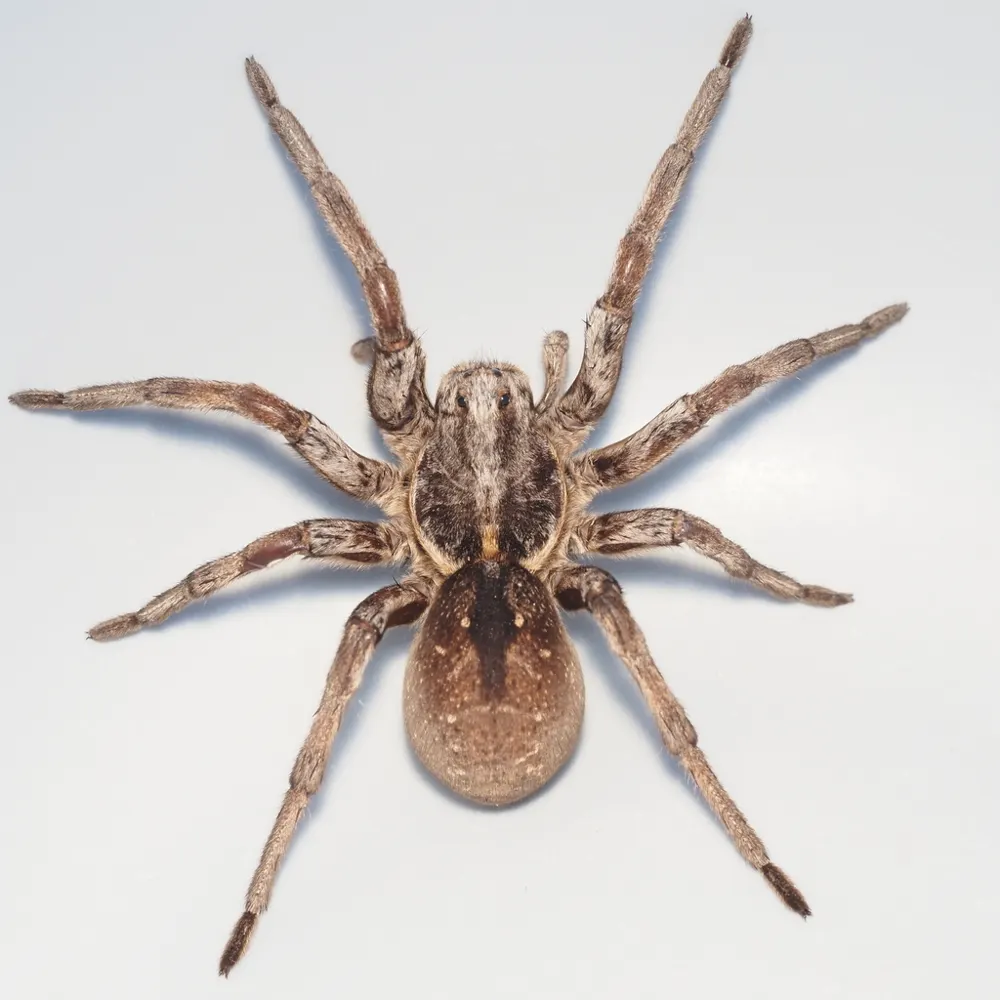
Check these features
- Large, hairy, dark brown spider with scattered gray hairs and no bold pattern
- Darker stripe down the middle of the abdomen; legs solid brown without bands
- Eyes in three rows: four small on the bottom, two big ones facing forward, two more on top
- Female carries a round egg sac attached under the rear of her body, or babies on her back
- Runs fast across floors at night; builds no web
Bites and stings
Bites are uncommon and happen when the spider is grabbed or pressed against skin. Expect pain, redness and maybe local swelling, usually gone within about a day. Wash the spot, use a cold pack, and get medical care if redness spreads, the spot looks infected, symptoms last more than a couple of days, or there are signs of an allergic reaction such as trouble breathing or swelling of the face or throat (call 911).
What to do
- Keep hands off; cover it with a large cup or container, slide stiff paper under it, and release it outside away from the door.
- If bitten, wash the spot with soap and water and apply a cold pack.
- Check for the tell-tale large forward-facing eyes and egg sac on the rear to confirm it is a wolf spider rather than a recluse.
- Shake out shoes, gloves and clothing left on garage or basement floors.
Look-alikes
Why it came inside
It lives in burrows and under boards, stones and siding outdoors; it wanders in through gaps under doors and around windows while hunting at night, and adults look for sheltered places in fall.
Keep it out
- Fit door sweeps and weatherstripping on exterior doors, including the garage entry.
- Seal gaps around windows, pipes and the foundation with caulk and repair window screens.
- Move boards, stones, firewood and heavy mulch away from the foundation.
- Put sticky traps along walls in basements and garages, out of reach of kids and pets.
- Reduce outdoor lights near doors, which draw the insects these spiders hunt.
What helps
Links go to Amazon search results so you can compare current options. As an Amazon Associate I earn from qualifying purchases. Always follow the product label.
Closes the gap under an exterior door. If you can see daylight under the door, bugs can get in.
See options on AmazonSeals the gaps around doors and windows that let in drafts and bugs alike.
See options on AmazonSilicone or siliconized acrylic caulk closes cracks around windows, pipes and baseboards. Bigger gaps need foam backer rod or expanding foam first.
See options on AmazonPatches or replaces torn window and door screens, one of the most common ways insects get in.
See options on AmazonFlat glue traps set along walls and in corners show what is moving through and where. Place them where pets and children can't reach.
See options on AmazonA long-handled catcher moves a spider or insect outside without you having to touch it.
See options on AmazonLets you remove bugs, webs and egg sacs without touching them. Empty the bag or canister outside right away.
See options on AmazonSources
- Penn State Extension
- Missouri Department of Conservation
- Oklahoma State University Extension
- Oregon State University Extension
Checked October 18, 2026. Rating backed by 3 sources. How we rate danger.