
Tan jumping spider
Harmless: this flat, gray-tan jumper that often shows up on walls in late fall almost never bites, and a bite is not harmful.
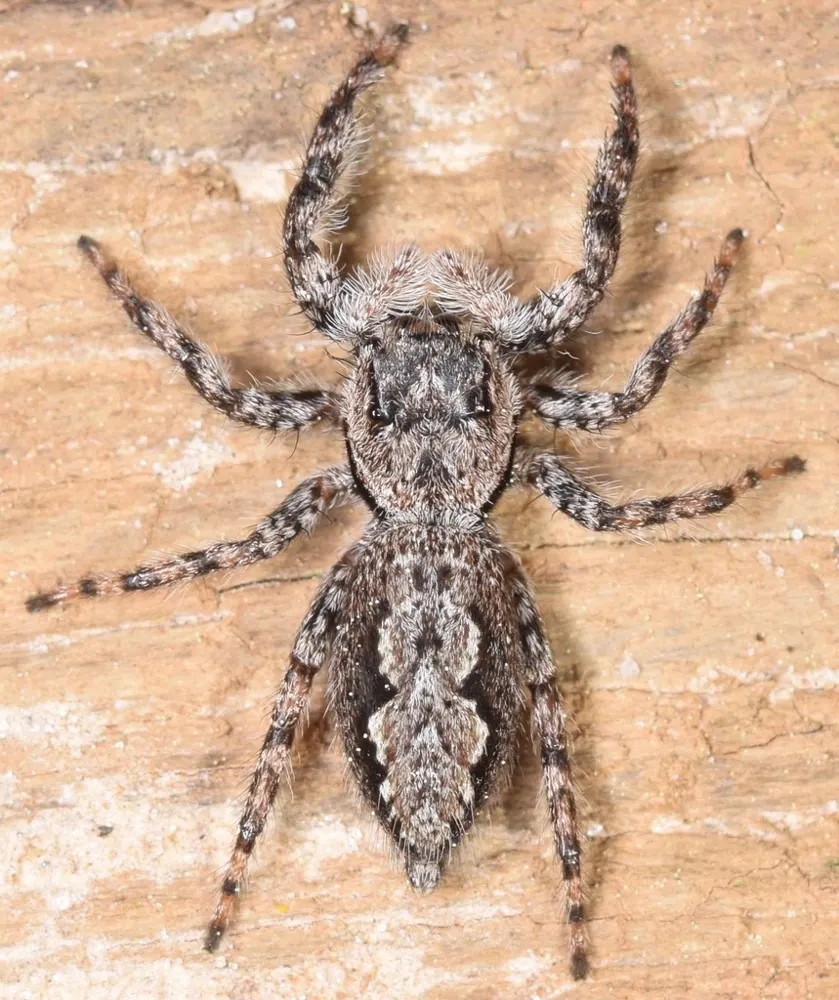
Check these features
- Flattened body in mottled gray, tan and brown with black flecks, like tree bark
- Wavy or zigzag pattern down the abdomen
- Two large forward-facing eyes; often turns to look at you
- Males have fuzzy white palps and white hairs on the jaws; females have shiny black jaws
- Sits flat on walls, doors, fences or tree trunks and hops when approached
Bites and stings
Almost never bites, and only if pinched. Any bite would be minor; wash the spot and get medical advice only if it spreads, looks infected, or you notice signs of an allergic reaction.
What to do
- No need to worry: coax it onto paper or into a cup and release it outside.
- Don't spray it; capturing and releasing works and keeps a useful insect-eater around.
- Check window frames and door edges for gaps if several show up in fall.
Look-alikes
Why it came inside
It lives on vertical surfaces like tree trunks, fences and house siding, and in late fall it often wanders indoors looking for a sheltered spot to spend the winter.
Keep it out
- Keep window and door screens in good repair.
- Seal gaps around windows, doors and siding with caulk.
- Add weatherstripping and door sweeps to exterior doors before late fall.
- Check firewood and potted plants before bringing them in.
What helps
Links go to Amazon search results so you can compare current options. As an Amazon Associate I earn from qualifying purchases. Always follow the product label.
Patches or replaces torn window and door screens, one of the most common ways insects get in.
See options on AmazonSilicone or siliconized acrylic caulk closes cracks around windows, pipes and baseboards. Bigger gaps need foam backer rod or expanding foam first.
See options on AmazonSeals the gaps around doors and windows that let in drafts and bugs alike.
See options on AmazonCloses the gap under an exterior door. If you can see daylight under the door, bugs can get in.
See options on AmazonA long-handled catcher moves a spider or insect outside without you having to touch it.
See options on AmazonSources
- Missouri Department of Conservation
- Oklahoma State University Extension
- Clemson Cooperative Extension Home & Garden Information Center
Checked October 18, 2026. Rating backed by 3 sources. How we rate danger.