
Bold jumping spider
Harmless: this fuzzy black jumper with white spots and shiny green jaws is curious, not aggressive, and bites only in rare cases when squeezed.
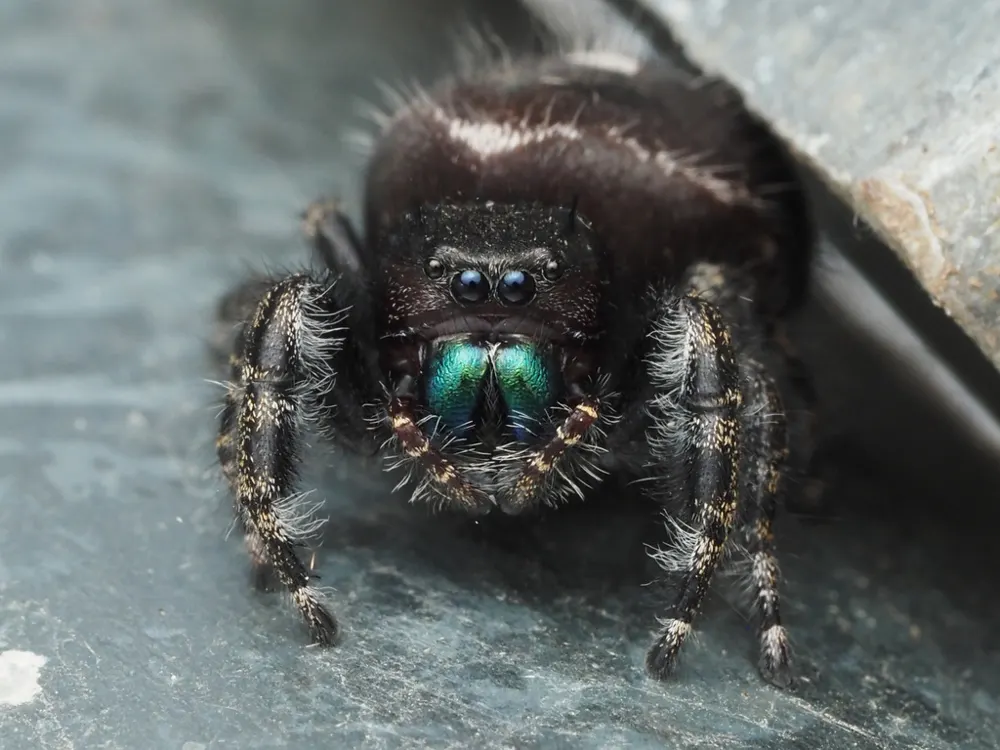
Check these features
- Stocky, fuzzy black body with a large white, yellow or orange spot in the middle of the abdomen and smaller spots beside it
- Shiny metallic green or blue jaws (fangs) on the front of the face
- Two huge forward-facing eyes; turns its head to watch you
- Moves in short jerky hops and can leap many times its length
- Short, sturdy legs, often with white bands; males have tufts of hair over the eyes
Bites and stings
Bites are rare and happen only when the spider is squeezed or trapped. A bite may cause a small, mildly painful, itchy red bump that fades within one to two days. Wash it and use a cold pack; get medical advice if it spreads, looks infected, or you have signs of an allergic reaction.
What to do
- Relax: let it walk onto a piece of paper or into a cup and set it outside.
- Avoid pinching or squeezing it in your hand, which is the only time it may bite.
- If bitten, wash the area and use a cold pack.
- Consider leaving it in the garden; it eats flies, caterpillars and other pests.
Look-alikes
Why it came inside
It hunts in sunny spots on siding, decks and window frames and often slips in around windows and doors; it may also come in on houseplants or firewood.
Keep it out
- Repair window screens and seal gaps around window frames with caulk.
- Fit door sweeps and weatherstripping on exterior doors.
- Check houseplants and firewood before bringing them in.
- Vacuum any silk retreats in window corners.
What helps
Links go to Amazon search results so you can compare current options. As an Amazon Associate I earn from qualifying purchases. Always follow the product label.
Patches or replaces torn window and door screens, one of the most common ways insects get in.
See options on AmazonSilicone or siliconized acrylic caulk closes cracks around windows, pipes and baseboards. Bigger gaps need foam backer rod or expanding foam first.
See options on AmazonCloses the gap under an exterior door. If you can see daylight under the door, bugs can get in.
See options on AmazonSeals the gaps around doors and windows that let in drafts and bugs alike.
See options on AmazonA long-handled catcher moves a spider or insect outside without you having to touch it.
See options on AmazonLets you remove bugs, webs and egg sacs without touching them. Empty the bag or canister outside right away.
See options on AmazonSources
- Penn State Extension
- Missouri Department of Conservation
- University of Michigan Museum of Zoology, Animal Diversity Web
- Oklahoma State University Extension
Checked October 18, 2026. Rating backed by 3 sources. How we rate danger.