
Western black widow
This is the most medically important spider in the western states; a bite from an adult female can cause severe muscle pain and cramps, so get medical advice right away.
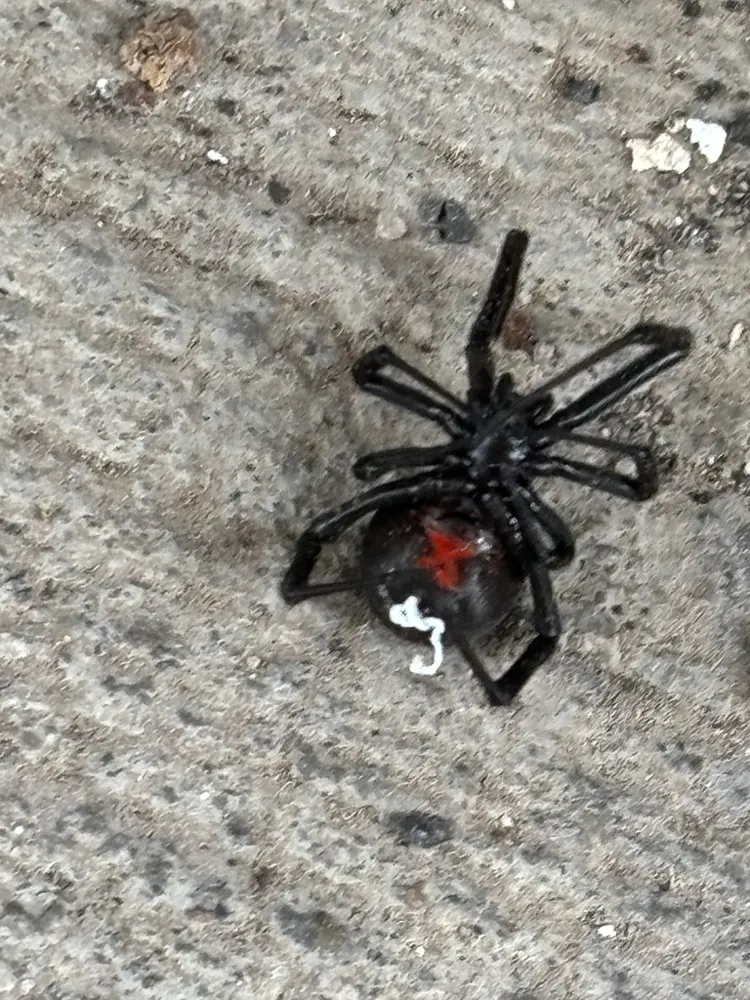
Check these features
- Adult female is shiny black (sometimes dark brown) with a large, round abdomen
- Red to orange hourglass on the underside, sometimes broken into spots or a bar
- Males and young are tan or gray with white, cream, orange or red stripes and spots
- Untidy, tangled, strong web low to the ground with a retreat in a hole or crack
- Smooth, round to teardrop-shaped cream or tan egg sac
Bites and stings
The bite is often painless or feels like a pinprick and may leave a small red mark. Within about an hour, pain can spread with muscle cramps (often a hard, rigid belly), sweating, nausea, restlessness or chest tightness. Symptoms usually peak in the first day and ease over a few days, but can linger. Get medical advice right away for any suspected bite; young children, older adults, pregnant people and anyone with heart or breathing problems should be seen promptly.
What to do
- Move away from the spider, then wash the bite with soap and water and apply a cool, damp cloth or wrapped ice.
- Call Poison Help at 1-800-222-1222 (US, free, any hour) for advice on what to do next.
- Call 911 for trouble breathing, swelling of the face or throat, or severe symptoms such as spreading pain, chest tightness or strong muscle cramps.
- If it is safe, photograph the spider or trap it in a jar for identification; do not handle it bare-handed.
- Do not cut the bite or try to remove venom.
Look-alikes
Why it came inside
It lives around foundations, woodpiles, rock walls, meter boxes and sheds, and wanders into garages, crawl spaces and basements, often near doors, vents and window wells, especially as the weather cools.
Keep it out
- Wear gloves when handling firewood, rocks, irrigation or meter boxes, and stored items.
- Shake out shoes, gloves and clothes left in garages before wearing them.
- Clear clutter from crawl spaces, garages and window wells, and keep woodpiles away from the house.
- Fit door sweeps, repair screens and seal cracks around the foundation and entry points.
- Vacuum webs and egg sacs and point outdoor lights away from doors to attract fewer insects.
What helps
Links go to Amazon search results so you can compare current options. As an Amazon Associate I earn from qualifying purchases. Always follow the product label.
Flat glue traps set along walls and in corners show what is moving through and where. Place them where pets and children can't reach.
See options on AmazonCloses the gap under an exterior door. If you can see daylight under the door, bugs can get in.
See options on AmazonSilicone or siliconized acrylic caulk closes cracks around windows, pipes and baseboards. Bigger gaps need foam backer rod or expanding foam first.
See options on AmazonPatches or replaces torn window and door screens, one of the most common ways insects get in.
See options on AmazonSeals the gaps around doors and windows that let in drafts and bugs alike.
See options on AmazonLets you remove bugs, webs and egg sacs without touching them. Empty the bag or canister outside right away.
See options on AmazonA long-handled catcher moves a spider or insect outside without you having to touch it.
See options on AmazonScorpions glow under ultraviolet light, which makes them much easier to spot at night.
See options on AmazonSources
- University of California IPM
- Colorado State University
- Washington State Department of Health
- Montana State University Extension
- Utah State University Extension
- Washington State University Extension
Checked October 18, 2026. Rating backed by 4 sources. How we rate danger.