
Woodlouse spider
Not dangerous: the big forward-pointing fangs look scary, but bites are rare and usually just sting briefly or itch.
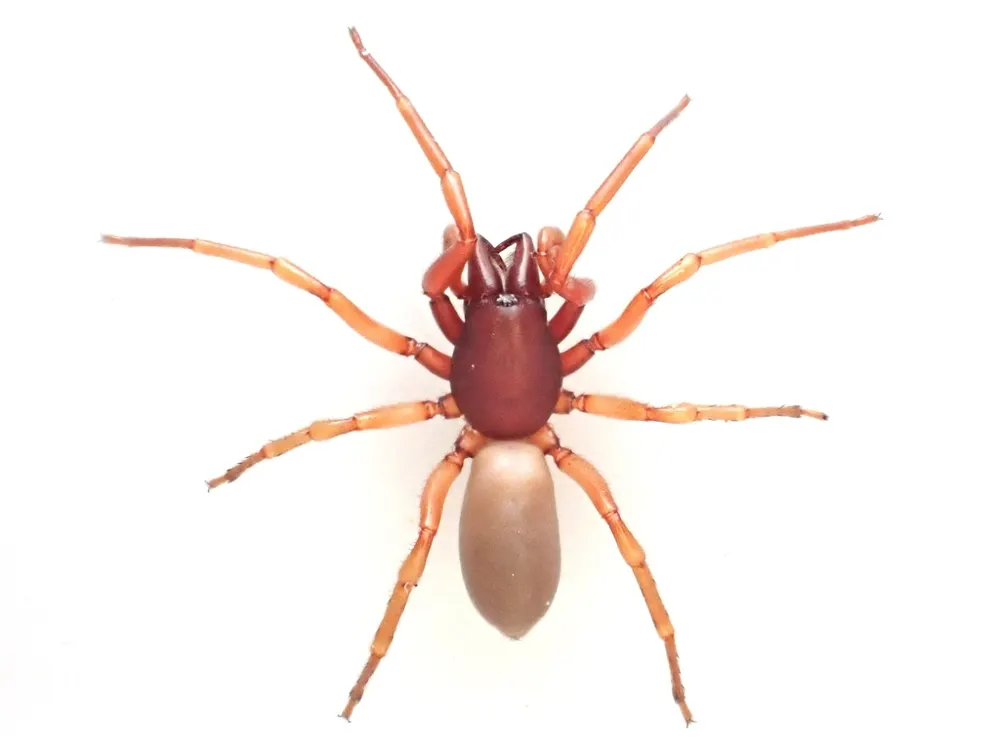
Check these features
- Shiny dark red to orange-red front body and legs
- Smooth, plain cream, gray or tan abdomen with no pattern
- Very large fangs that stick straight out in front of the head
- Six eyes in a tight oval group
- Found under bricks, stones, logs, mulch or damp boxes, often near pill bugs
Bites and stings
Rarely bites, but it can nip if picked up or pressed against skin. A bite usually causes brief pain and a small, itchy red spot that fades without treatment. Wash the area, use a cold pack, and get medical advice if redness spreads, the spot looks infected, or you have signs of an allergic reaction.
What to do
- Don't pick it up with bare hands; scoop it into a cup or jar with a card and release it outside.
- If bitten, wash the spot with soap and water and apply a cold pack.
- Vacuum any you find indoors if you prefer not to relocate them.
- If you see many, look for damp areas and pill bugs near the foundation, since that is what draws them.
Look-alikes
Why it came inside
It hunts pill bugs and sow bugs in damp spots, so it follows them in from mulch, woodpiles and foundation areas, especially where basements or crawl spaces stay moist.
Keep it out
- Reduce moisture in basements and crawl spaces; a dehumidifier helps.
- Move mulch, leaf litter, woodpiles and stones back from the foundation.
- Seal foundation cracks and gaps with caulk and fit tight door sweeps.
- Place sticky traps along basement walls from late summer through fall to catch wanderers.
- Control pill bugs and sow bugs around the house, which removes the spider's food.
What helps
Links go to Amazon search results so you can compare current options. As an Amazon Associate I earn from qualifying purchases. Always follow the product label.
Keeping a basement at about 50 percent humidity or lower makes it less welcoming to the bugs that need damp air.
See options on AmazonSilicone or siliconized acrylic caulk closes cracks around windows, pipes and baseboards. Bigger gaps need foam backer rod or expanding foam first.
See options on AmazonCloses the gap under an exterior door. If you can see daylight under the door, bugs can get in.
See options on AmazonFlat glue traps set along walls and in corners show what is moving through and where. Place them where pets and children can't reach.
See options on AmazonLets you remove bugs, webs and egg sacs without touching them. Empty the bag or canister outside right away.
See options on AmazonA long-handled catcher moves a spider or insect outside without you having to touch it.
See options on AmazonSources
- Utah State University Extension
- University of California Agriculture and Natural Resources
- Penn State Extension
- University of Minnesota Extension
Checked October 18, 2026. Rating backed by 3 sources. How we rate danger.