
Brown recluse
Most brown recluse bites heal on their own, but some cause a slow-healing skin wound and a few cause serious illness, so get medical advice if you think you were bitten.
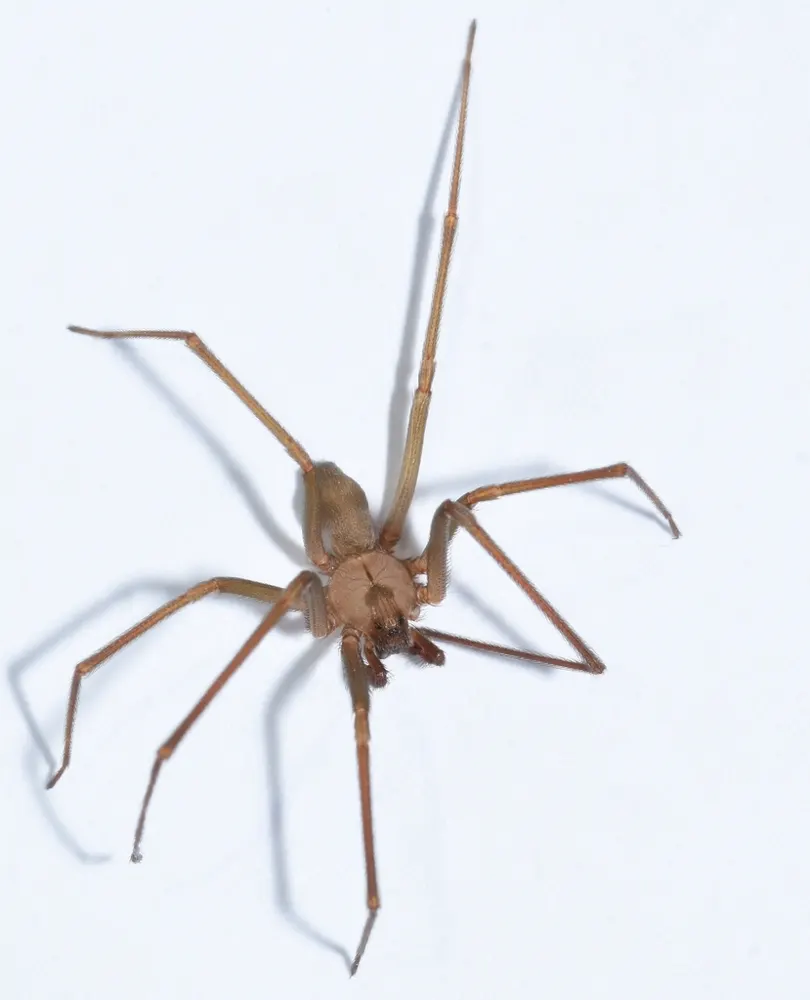
Check these features
- Six eyes in three pairs arranged in a U-shape (most spiders have eight); a magnifier helps
- Dark violin-shaped mark on the front body section, with the violin's neck pointing back toward the abdomen
- Plain light tan to chocolate brown, with no stripes, bands or spots on the legs or abdomen
- Long, thin, evenly colored legs without obvious spines
- Does not build a catching web in open corners; hides in small, loose, irregular silk retreats
Bites and stings
The bite is often painless at first. Redness, swelling and tenderness may show up several hours later. Most bites stay small and heal within a few weeks. Some develop a blister and a sunken, bluish or dark patch of dead skin that can widen over days to weeks and leave a scar. Rarely, fever, chills, rash, vomiting, dark urine or weakness appear in the first days, most often in children; that is an emergency. Get medical advice for any suspected bite, and see a doctor promptly if a wound is growing, darkening or blistering.
What to do
- Wash the bite with soap and water, apply a cool, damp cloth or wrapped ice, and keep the area raised if you can.
- Call Poison Help at 1-800-222-1222 (US, free, any hour) for advice on what to do next.
- Call 911 for trouble breathing, swelling of the face or throat, or severe symptoms such as high fever, dark urine, or feeling very ill.
- See a doctor promptly if the bite blisters, darkens, spreads or is very painful, and mention that a recluse bite is possible.
- If you can do it safely, keep the spider (even squashed) in a sealed jar so an expert can identify it.
- Do not cut the wound or apply heat.
Look-alikes
Why it came inside
It lives readily inside homes, sheds and barns, hiding in cracks, wall voids, boxes, clutter and stored clothing, and can survive months without food or water.
Keep it out
- Shake out shoes, clothing, towels and bedding that have been on the floor or in storage before using them.
- Pull beds slightly away from walls, remove bed skirts and keep bedding off the floor.
- Store seldom-used items in sealed plastic containers instead of cardboard boxes, and reduce clutter.
- Put many sticky traps along walls, behind furniture and in closets to catch and monitor recluses.
- Seal cracks and gaps around the foundation, windows and pipes, and move woodpiles and debris away from the house.
What helps
Links go to Amazon search results so you can compare current options. As an Amazon Associate I earn from qualifying purchases. Always follow the product label.
Flat glue traps set along walls and in corners show what is moving through and where. Place them where pets and children can't reach.
See options on AmazonSilicone or siliconized acrylic caulk closes cracks around windows, pipes and baseboards. Bigger gaps need foam backer rod or expanding foam first.
See options on AmazonCloses the gap under an exterior door. If you can see daylight under the door, bugs can get in.
See options on AmazonSeals the gaps around doors and windows that let in drafts and bugs alike.
See options on AmazonLets you remove bugs, webs and egg sacs without touching them. Empty the bag or canister outside right away.
See options on AmazonA 10x magnifier makes small features easier to check, like eye patterns, markings or the shield on a tick.
See options on AmazonScorpions glow under ultraviolet light, which makes them much easier to spot at night.
See options on AmazonA long-handled catcher moves a spider or insect outside without you having to touch it.
See options on AmazonSources
- University of Kentucky Entomology
- Penn State Extension
- CDC / NIOSH
- Entomology Today (Entomological Society of America)
- Iowa State University Extension (via State of Iowa publications)
Checked October 18, 2026. Rating backed by 3 sources. How we rate danger.