
Barn funnel weaver
Harmless: this fast brown spider that shows up in sinks, tubs and basement corners is shy and not considered a threat to people.
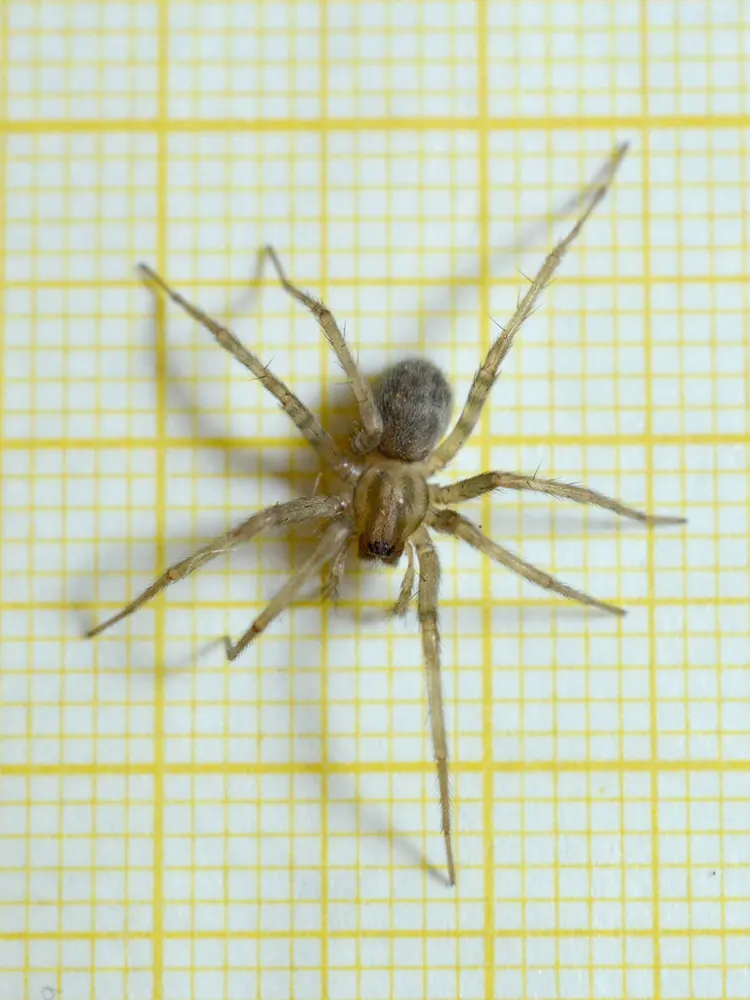
Check these features
- Reddish-brown front body with two faint darker or pale-gray bands
- Pale, mottled gray-tan abdomen with darker patches or chevrons
- Long legs with faint pale and dark banding
- Runs very fast and often turns up trapped in sinks or bathtubs
- Flat sheet web with a tube retreat, low in corners, near the floor
Bites and stings
Not known to bite people; it runs away rather than defends itself, and its fangs are unlikely to break skin. Get medical advice for any bite that becomes very red, swollen, painful or shows signs of infection.
What to do
- No need to worry: trap it under a cup with a card and release it outside, or vacuum it up.
- If one is in a tub or sink, give it a towel or stick to climb out, or remove it with a cup.
- Vacuum webs in low corners, behind furniture and in basements.
- If you live in the Pacific Northwest and want an ID, save it in a sealed jar and ask your county extension office.
Look-alikes
Why it came inside
It is an introduced spider that breeds indoors, building webs in dark, quiet corners; adult males wander in search of females and often end up in sinks and tubs they cannot climb out of.
Keep it out
- Fit door sweeps and weatherstripping, and seal foundation cracks and gaps with caulk.
- Reduce clutter and keep stored boxes off the floor and away from walls.
- Vacuum basements, garages and corners often.
- Place sticky traps along walls in basements and garages to catch wandering males, out of reach of children and pets.
What helps
Links go to Amazon search results so you can compare current options. As an Amazon Associate I earn from qualifying purchases. Always follow the product label.
Flat glue traps set along walls and in corners show what is moving through and where. Place them where pets and children can't reach.
See options on AmazonCloses the gap under an exterior door. If you can see daylight under the door, bugs can get in.
See options on AmazonSeals the gaps around doors and windows that let in drafts and bugs alike.
See options on AmazonSilicone or siliconized acrylic caulk closes cracks around windows, pipes and baseboards. Bigger gaps need foam backer rod or expanding foam first.
See options on AmazonLets you remove bugs, webs and egg sacs without touching them. Empty the bag or canister outside right away.
See options on AmazonA long-handled catcher moves a spider or insect outside without you having to touch it.
See options on AmazonSources
- Colorado State University, Dept. of Agricultural Biology
- Penn State Extension
- UC Statewide IPM Program
- UC Statewide IPM Program
Checked October 18, 2026. Rating backed by 3 sources. How we rate danger.