
Brown-banded cockroach
Brown-banded cockroaches do not bite, but like other house roaches they can carry germs and leave allergens that can trigger asthma and allergies.
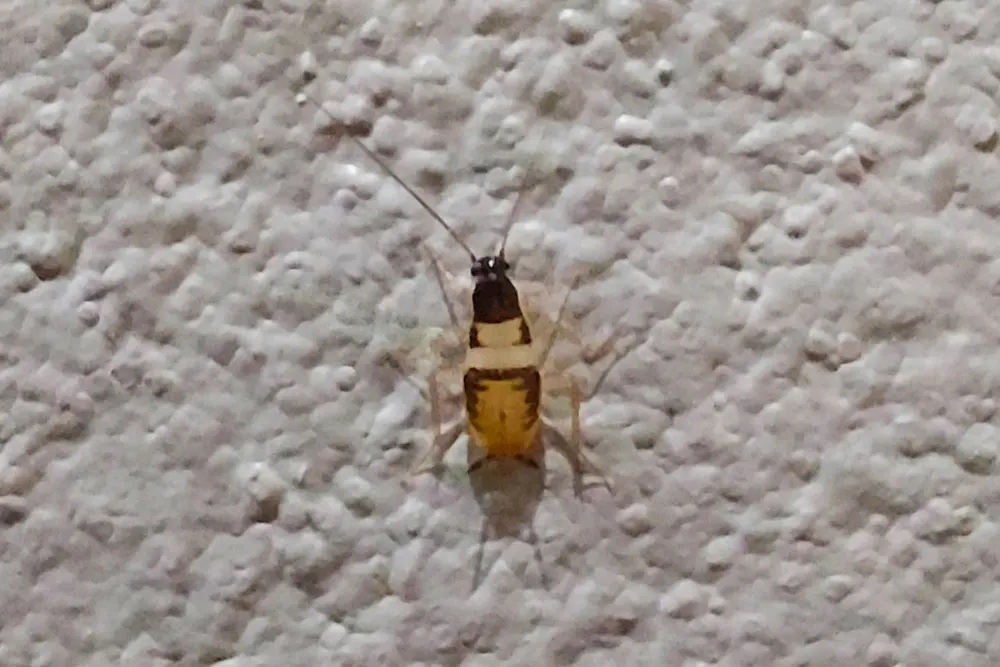
Check these features
- Small, light brown to golden tan body
- Two pale or yellowish bands across the wings and body
- A dark, bell-shaped mark on the shield behind the head instead of two stripes
- Males are slimmer with wings covering the body; females are darker and broader with shorter wings
- Small egg cases glued to the undersides of furniture, ceilings and high on walls
Bites and stings
Does not bite people. The concern is allergens from droppings and shed skins, which can worsen allergies and asthma, and germs on food it crawls over.
What to do
- Catch or photograph one and look for the pale cross-bands, since this species hides in different places than the German cockroach and needs traps and baits placed higher and throughout the home.
- Put sticky traps in bedrooms, closets, behind furniture and near electronics and appliances, not only in the kitchen, to find where they hide.
- Check the undersides of tables, dressers, shelves and picture frames for small egg cases and vacuum them up with a HEPA or multi-filter vacuum.
- Use bait stations in the hiding spots you find, following the product label; this species can be hard to control with baits alone, so a pest professional may be needed.
Look-alikes
Why it came inside
Brown-banded cockroaches live indoors and like warm, dry spots, so they spread through a whole home, hiding high on walls and ceilings, behind picture frames, inside furniture and near warm appliance motors; they often arrive in used furniture or electronics with egg cases attached.
Keep it out
- Inspect secondhand furniture, electronics and boxes for egg cases before bringing them home.
- Store food, including dry goods, in sealed containers.
- Reduce clutter such as stacks of paper and cardboard where they hide.
- Caulk cracks and gaps around baseboards, cabinets and wall openings.
What helps
Links go to Amazon search results so you can compare current options. As an Amazon Associate I earn from qualifying purchases. Always follow the product label.
Flat glue traps set along walls and in corners show what is moving through and where. Place them where pets and children can't reach.
See options on AmazonEnclosed baits work slowly as insects carry the bait back to where they hide. Don't spray near the baits, and follow the label.
See options on AmazonLets you remove bugs, webs and egg sacs without touching them. Empty the bag or canister outside right away.
See options on AmazonGlass or thick plastic containers with tight lids keep pantry pests out of flour, cereal, rice and pet food.
See options on AmazonSilicone or siliconized acrylic caulk closes cracks around windows, pipes and baseboards. Bigger gaps need foam backer rod or expanding foam first.
See options on AmazonSources
- Utah State University Extension (IPM)
- University of Kentucky Entomology (ENTFACT-614)
- U.S. Environmental Protection Agency (archived page, Cockroaches and Schools)
- University of California Statewide IPM Program
- Oklahoma State University Extension
- Rutgers New Jersey Agricultural Experiment Station
Checked October 18, 2026. Rating backed by 3 sources. How we rate danger.