
False black widow
Not a true widow: a bite can hurt and swell for a day or two, but it is far milder than a black widow bite.
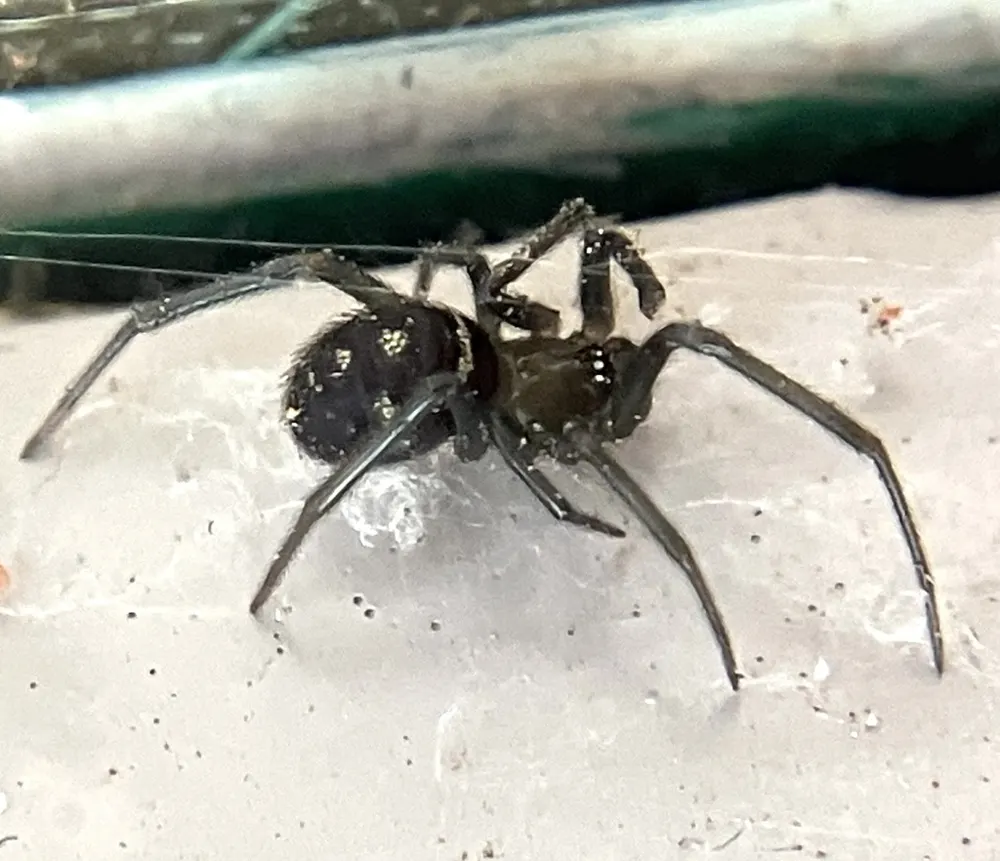
Check these features
- Shiny dark purplish-brown to nearly black, round to oval abdomen
- No red hourglass on the underside
- Often faint pale yellowish or grayish marks or a thin band on the top of the abdomen
- Reddish-brown front body and slightly darker legs
- Hangs upside down in an untidy cobweb in a corner, cupboard or under furniture
Bites and stings
Bites are uncommon and happen when the spider is trapped against skin. A bite usually causes burning or moderate pain within the first hour and local swelling or a small blister; some people feel mildly nauseous, headachy or tired for a day or two. Get medical care if symptoms spread or worsen, if the bite looks infected, or for signs of an allergic reaction such as trouble breathing or swelling of the face.
What to do
- Wash the bite with soap and water and apply a cool, damp cloth to ease pain and swelling.
- Watch the area over the next day; most bites settle on their own.
- Call 911 for trouble breathing or swelling of the face or throat.
- Get medical care if pain spreads, symptoms last more than a couple of days, or the area becomes red, hot and increasingly painful.
- If unsure whether it was a black widow, check the belly for a red hourglass in a photo, or trap the spider in a jar.
Look-alikes
Why it came inside
This European spider thrives indoors and lives its whole life inside buildings, hunting insects and other spiders in quiet corners, cupboards and under appliances.
Keep it out
- Vacuum webs and spiders from corners, under furniture and behind appliances.
- Reduce clutter in closets, basements and garages.
- Seal cracks and gaps around doors, windows and the foundation and fit door sweeps.
- Place sticky traps along walls in basements, bathrooms and garages to catch wandering spiders.
What helps
Links go to Amazon search results so you can compare current options. As an Amazon Associate I earn from qualifying purchases. Always follow the product label.
Lets you remove bugs, webs and egg sacs without touching them. Empty the bag or canister outside right away.
See options on AmazonFlat glue traps set along walls and in corners show what is moving through and where. Place them where pets and children can't reach.
See options on AmazonCloses the gap under an exterior door. If you can see daylight under the door, bugs can get in.
See options on AmazonSilicone or siliconized acrylic caulk closes cracks around windows, pipes and baseboards. Bigger gaps need foam backer rod or expanding foam first.
See options on AmazonSeals the gaps around doors and windows that let in drafts and bugs alike.
See options on AmazonA long-handled catcher moves a spider or insect outside without you having to touch it.
See options on AmazonSources
Checked October 18, 2026. Rating backed by 3 sources. How we rate danger.