
American cockroach
American cockroaches do not bite, but they travel from sewers and drains and can carry germs onto food, and their droppings can worsen allergies and asthma.
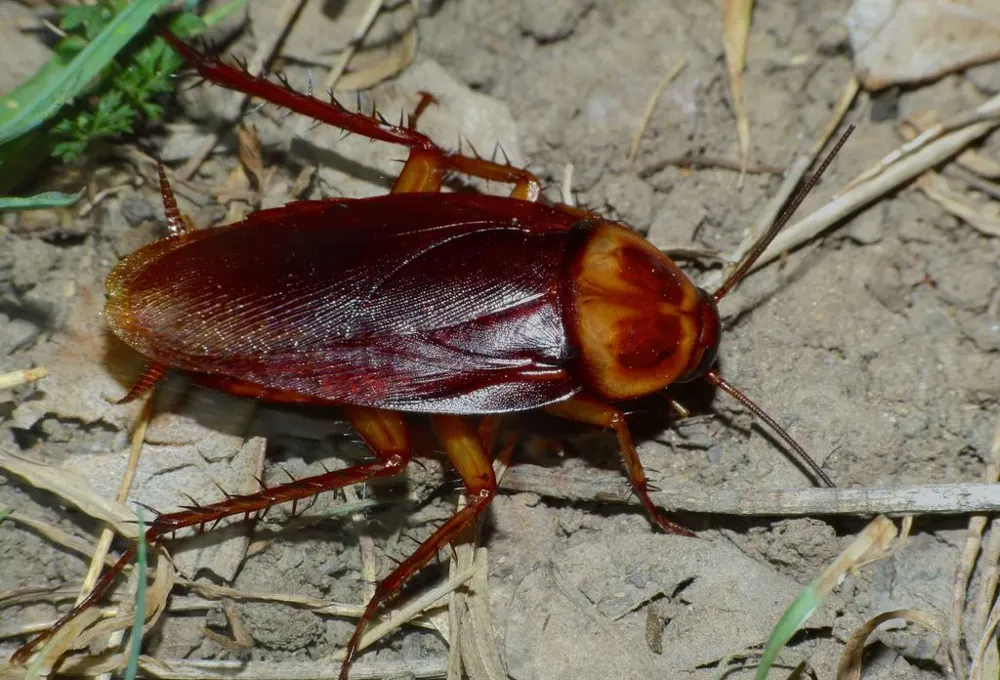
Check these features
- The largest common house cockroach, about the length of a thumb
- Shiny reddish brown body
- Pale yellowish band around the edge of the shield behind the head
- Long wings that reach past the tip of the body in both males and females
- Rarely flies, but may glide or fly in hot, humid weather
Bites and stings
Does not bite people. The concern is germs carried from drains and sewers onto food and counters, and allergens that can worsen asthma. Talk with a doctor if asthma or allergy symptoms get worse at home.
What to do
- Catch it with a bug catcher or under a cup and remove it, or trap it on a sticky trap; one stray roach after rain or in summer often came in from a drain or outdoors.
- Run water in seldom-used floor drains, sinks and tubs so the drain traps stay full, and cover floor drains at night if roaches keep appearing there.
- Wipe and wash any counter, dish or food it crossed.
- Place sticky traps in basements, laundry areas and near drains to see how many there are and where they come from.
- If you keep seeing them, use bait stations in hidden spots following the label, and have a plumber or pest professional check for broken sewer lines or drains.
Look-alikes
Why it came inside
American cockroaches breed in warm, moist places such as sewers, storm drains, steam tunnels and crawl spaces, and come into homes through floor drains, damaged pipes, dry drain traps and gaps around doors and screens; the breeding site may be well away from where you see them.
Keep it out
- Seal gaps around plumbing, drains and pipes where they enter walls and floors.
- Install door sweeps and repair torn window screens.
- Keep drain traps filled with water and repair damaged pipes.
- Store food in sealed containers and keep trash bins covered, indoors and out.
- Clear leaf litter, mulch piles and debris away from the foundation.
What helps
Links go to Amazon search results so you can compare current options. As an Amazon Associate I earn from qualifying purchases. Always follow the product label.
Flat glue traps set along walls and in corners show what is moving through and where. Place them where pets and children can't reach.
See options on AmazonEnclosed baits work slowly as insects carry the bait back to where they hide. Don't spray near the baits, and follow the label.
See options on AmazonCloses the gap under an exterior door. If you can see daylight under the door, bugs can get in.
See options on AmazonSilicone or siliconized acrylic caulk closes cracks around windows, pipes and baseboards. Bigger gaps need foam backer rod or expanding foam first.
See options on AmazonPatches or replaces torn window and door screens, one of the most common ways insects get in.
See options on AmazonA long-handled catcher moves a spider or insect outside without you having to touch it.
See options on AmazonSources
- University of California Statewide IPM Program (Pest Notes: Cockroaches)
- University of Kentucky Entomology (ENTFACT-614)
- U.S. Environmental Protection Agency (archived page, Cockroaches and Schools)
- Rutgers New Jersey Agricultural Experiment Station
Checked October 18, 2026. Rating backed by 3 sources. How we rate danger.