
Black carpenter ant
Carpenter ants can give a pinch with their jaws but have no stinger and pose no real threat to people; the concern is that they hollow out damp wood in the house.
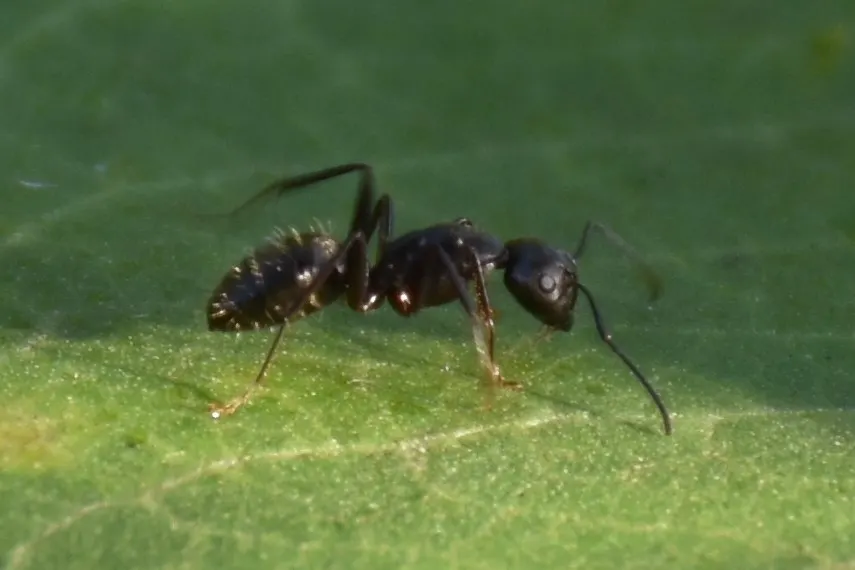
Check these features
- Large, black ant, often with fine yellowish hairs on the rear end
- Workers in the same nest range from medium to very large
- Smoothly rounded, arched back (thorax) when seen from the side, with one bump in the waist
- Elbowed antennae and a clearly pinched waist
- Piles of coarse, stringy sawdust mixed with insect parts below cracks, trim or siding
Bites and stings
Carpenter ants do not sting. A large worker can pinch the skin with its jaws if it is handled, which may smart for a moment, but it is not dangerous. Wash the spot with soap and water.
What to do
- Do not panic; a few ants indoors do not always mean your house is infested, since a colony outside may be sending foragers in.
- Vacuum up winged ants and stray workers, and collect a few in a sealed container in case you want them identified by your county Extension office.
- Look for sawdust piles and follow ant trails at night with a flashlight, inside and outside, to find where the nest is.
- Check for and fix leaks around roofs, gutters, windows, plumbing and bathrooms, and replace soft or water-damaged wood.
- If you use bait stations, place them along active trails and follow the label; for nests inside walls, hire a licensed pro rather than spraying liquids into the wall.
- If you are unsure whether you have ants or termites, have it checked, because termites need a different treatment.
Look-alikes
Why it came inside
Carpenter ants nest in wood that has been softened by leaks or moisture, such as around windows, roof edges, decks, porches and bathrooms, and may set up satellite nests in wall voids or foam insulation. Workers from a nest outside, often in a nearby tree or stump, also come in at night looking for water and sugary food.
Keep it out
- Keep gutters and downspouts working and fix roof, plumbing and window leaks quickly.
- Trim tree branches and shrubs so they do not touch the house, and remove old stumps near it.
- Store firewood off the ground and away from the house, and avoid wood-to-soil contact.
- Seal gaps where pipes and wires enter, and keep screens and weatherstripping in good repair.
- Keep food sealed and wipe up sugary spills.
What helps
Links go to Amazon search results so you can compare current options. As an Amazon Associate I earn from qualifying purchases. Always follow the product label.
Enclosed baits work slowly as insects carry the bait back to where they hide. Don't spray near the baits, and follow the label.
See options on AmazonSilicone or siliconized acrylic caulk closes cracks around windows, pipes and baseboards. Bigger gaps need foam backer rod or expanding foam first.
See options on AmazonSeals the gaps around doors and windows that let in drafts and bugs alike.
See options on AmazonPatches or replaces torn window and door screens, one of the most common ways insects get in.
See options on AmazonGlass or thick plastic containers with tight lids keep pantry pests out of flour, cereal, rice and pet food.
See options on AmazonLets you remove bugs, webs and egg sacs without touching them. Empty the bag or canister outside right away.
See options on AmazonKeeping a basement at about 50 percent humidity or lower makes it less welcoming to the bugs that need damp air.
See options on AmazonSources
- University of Arkansas Cooperative Extension (FSA7013)
- Maine Dept. of Agriculture, Conservation and Forestry (School IPM)
- Penn State Extension
- Rutgers NJAES Cooperative Extension
- University of Nebraska-Lincoln Extension (G1738)
- University of Georgia Extension (B1225)
Checked October 18, 2026. Rating backed by 2 sources. How we rate danger.