
Argentine ant
Argentine ants have no stinger and are not a danger to people, but they can show up by the thousands and get into food.
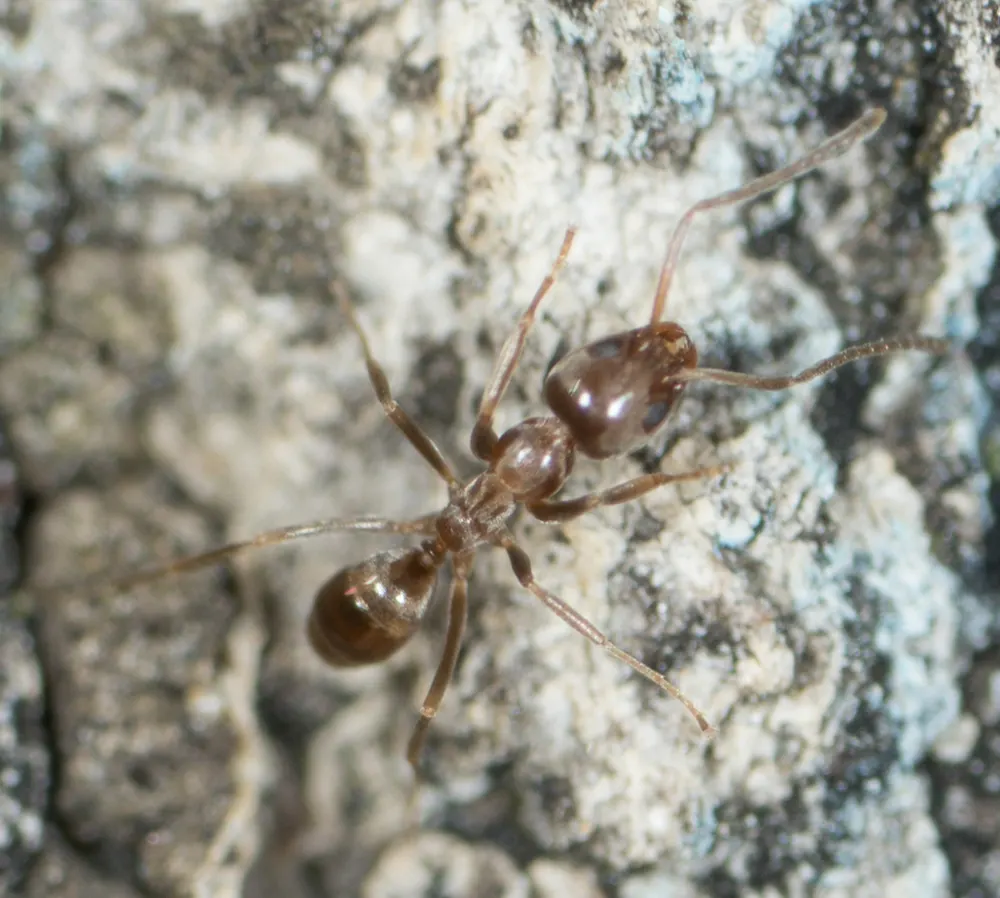
Check these features
- Tiny, light to dark brown ant, all workers the same size
- One upright, pointed node in the waist
- Moves in thick, fast, steady trails, often by the thousands
- Musty smell when crushed (not the strong rotten-coconut smell of odorous house ants)
- Trails often lead to sinks, dishwashers, water pipes and other damp spots
Bites and stings
Does not sting people and rarely if ever bites. No medical care is needed.
What to do
- Wipe up the trail with soapy water and remove or seal the food it leads to; discard food the ants have swarmed over.
- Place bait stations near where the ants come in and along trails, and follow the label; do not spray around bait stations.
- Give the bait several days to spread through the colony, and keep stations filled.
- Follow trails outside to find nests, and seal the cracks and gaps where ants enter.
- Because colonies can be huge, call a licensed pro if baiting does not bring numbers down.
Look-alikes
Why it came inside
They move indoors when it gets too wet or too dry outside, or when their outdoor nest is disturbed, and they look for water and food, often nesting near sinks, tubs, leaks and pipes or in wall voids.
Keep it out
- Keep sweets, pet food and pantry items in sealed containers and clean up spills right away.
- Seal cracks and gaps around foundations, windows, doors, pipes and wires.
- Fix leaks and cut back extra watering of lawns and beds next to the house.
- Trim shrubs and tree branches that touch the house and clear clutter from around the foundation.
What helps
Links go to Amazon search results so you can compare current options. As an Amazon Associate I earn from qualifying purchases. Always follow the product label.
Enclosed baits work slowly as insects carry the bait back to where they hide. Don't spray near the baits, and follow the label.
See options on AmazonSilicone or siliconized acrylic caulk closes cracks around windows, pipes and baseboards. Bigger gaps need foam backer rod or expanding foam first.
See options on AmazonGlass or thick plastic containers with tight lids keep pantry pests out of flour, cereal, rice and pet food.
See options on AmazonSeals the gaps around doors and windows that let in drafts and bugs alike.
See options on AmazonCloses the gap under an exterior door. If you can see daylight under the door, bugs can get in.
See options on AmazonSources
- University of California, Riverside, Center for Invasive Species Research
- Clemson Cooperative Extension Home & Garden Information Center
- Utah State University Extension
Checked October 18, 2026. Rating backed by 2 sources. How we rate danger.