
Red imported fire ant
Fire ants swarm and sting when their mound is disturbed, leaving burning welts that turn into white pustules; most people heal fine, but call 911 for trouble breathing, chest pain or swelling.
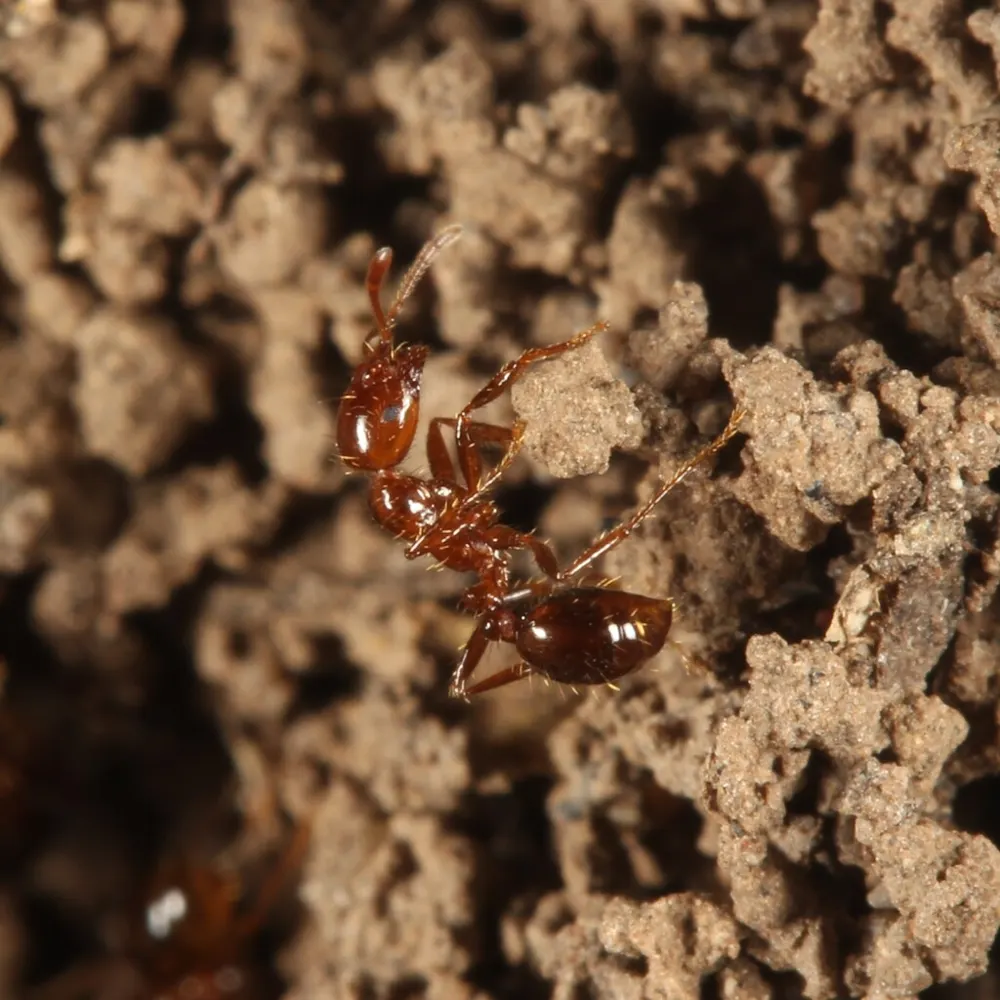
Check these features
- Reddish-brown ants with a darker rear end (gaster)
- Workers of mixed sizes, small to large, in the same trail or mound
- Two bumps (nodes) in the narrow waist
- Loose, fluffy dirt mounds in sunny lawns and fields, with no single hole on top, often after rain
- Ants pour out fast and run up anything touching the mound when it is disturbed
Bites and stings
A fire ant grabs the skin with its jaws and stings, often several times in a ring, and many ants may sting at once. The spot burns right away, then turns red and swells within minutes; within about a day most people get a small white fluid-filled bump (pustule) that can last several weeks. Do not pop the pustules, because broken ones can get infected; keep them clean. Get medical care for many stings at once or signs of infection. Call 911 right away for trouble breathing, chest pain, swelling of the face or throat, slurred speech, heavy sweating or dizziness, which can mean a severe allergic reaction. Watch babies, older adults and anyone who cannot move away closely.
What to do
- Brush ants off the skin quickly with your hand or a cloth (water alone will not wash them off) and move away from the mound.
- Call 911 for any trouble breathing, chest pain or swelling of the face or throat; otherwise wash the stings with soap and water and use a cold pack.
- Leave pustules intact, keep them clean, and ask a pharmacist or doctor about an antihistamine or anti-itch product for itching.
- Outdoors, use a fire ant bait spread over the yard when ants are actively foraging, then treat mounds near walkways or play areas with a product labeled for fire ant mounds; follow the label.
- Indoors, vacuum up foraging ants, find where they enter, and seal the gap; call a licensed pro if ants are nesting in walls or reaching beds.
Look-alikes
Why it came inside
Workers forage indoors through tiny cracks for food, water and even laundry, and whole colonies may move into wall voids during extreme heat, drought or flooding.
Keep it out
- Caulk cracks and gaps around foundations, windows, pipes and wires.
- Keep food sealed and wipe up spills and pet food so foragers are not rewarded indoors.
- Check the yard for new mounds in spring and fall and treat early.
- Keep cribs and beds of people who cannot move on their own away from walls where ants are seen.
- Wear shoes and gloves in the yard and look before you sit or set things down on the ground.
What helps
Links go to Amazon search results so you can compare current options. As an Amazon Associate I earn from qualifying purchases. Always follow the product label.
Silicone or siliconized acrylic caulk closes cracks around windows, pipes and baseboards. Bigger gaps need foam backer rod or expanding foam first.
See options on AmazonGlass or thick plastic containers with tight lids keep pantry pests out of flour, cereal, rice and pet food.
See options on AmazonLets you remove bugs, webs and egg sacs without touching them. Empty the bag or canister outside right away.
See options on AmazonSources
- Texas A&M AgriLife Extension (ENTO-005)
- CDC / NIOSH
- USDA APHIS
- USDA APHIS (regulated areas, 7 CFR 301.81-3)
- Texas A&M AgriLife Extension Fire Ant Program
- University of Tennessee Extension
- North Carolina Department of Agriculture and Consumer Services
Checked October 18, 2026. Rating backed by 3 sources. How we rate danger.