
Greenhouse millipede
Greenhouse millipedes do not bite or sting; they can give off a smelly defensive fluid when handled, so pick them up with a tissue or sweep them up.
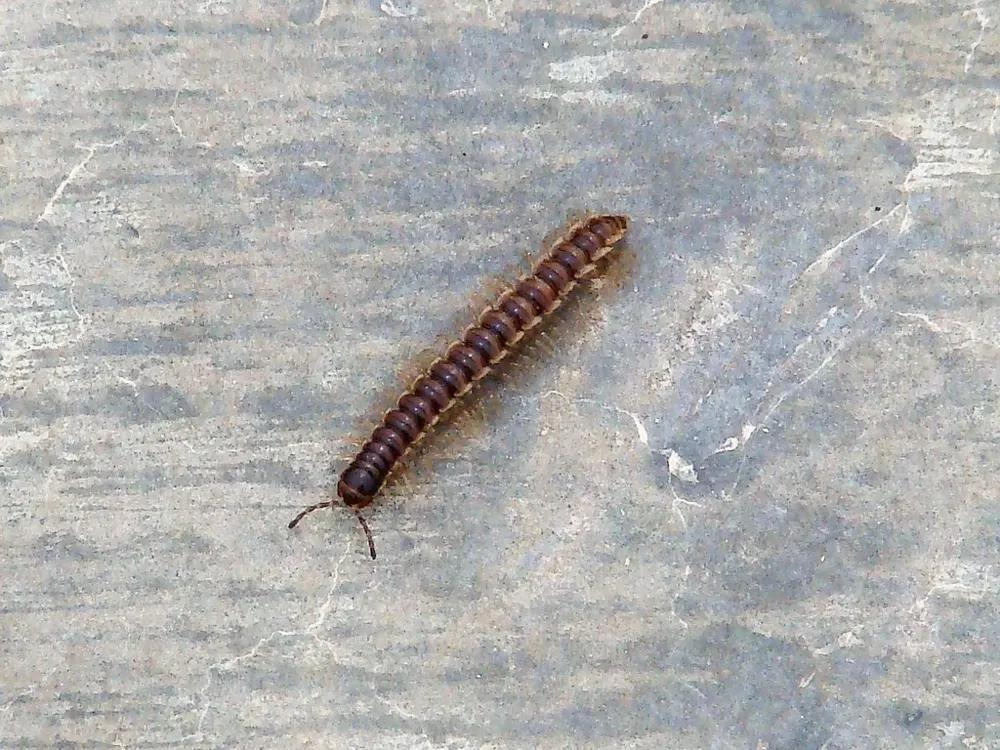
Check these features
- Long, slightly flattened body made of many segments
- Reddish brown to dark brown on top, paler on the sides and underneath
- Two pairs of short legs on most body segments
- Slow crawler that curls up or goes still when touched
- Often shows up in large groups after heavy rain
Bites and stings
Does not bite people. When handled it may release a smelly defensive fluid that can stain or briefly irritate skin; wash your hands with soap and water after touching one, and keep it away from your eyes.
What to do
- Sweep or vacuum up millipedes you find indoors; they will die on their own in dry indoor air.
- If you touch one, wash your hands, and avoid rubbing your eyes.
- Put sticky traps across doorways and basement entry points to catch ones coming in during a migration.
- Outdoors, sweep dead millipedes off patios and walks; indoor sprays add little.
Look-alikes
Why it came inside
Greenhouse millipedes build up in mulch, leaf litter, compost and lawn thatch, and heavy rain or drought drives large numbers to wander onto patios and into homes through door gaps and foundation cracks; indoor air is too dry for them, so most die within a short time.
Keep it out
- Rake mulch, grass clippings and leaf litter back from the foundation, or use gravel next to the house.
- Install door sweeps and tight weatherstripping, and seal foundation cracks and weep-hole gaps.
- Fix drainage so rainwater does not soak the soil next to the house.
- Run a dehumidifier in damp basements and keep window wells clear of debris.
What helps
Links go to Amazon search results so you can compare current options. As an Amazon Associate I earn from qualifying purchases. Always follow the product label.
Closes the gap under an exterior door. If you can see daylight under the door, bugs can get in.
See options on AmazonSeals the gaps around doors and windows that let in drafts and bugs alike.
See options on AmazonSilicone or siliconized acrylic caulk closes cracks around windows, pipes and baseboards. Bigger gaps need foam backer rod or expanding foam first.
See options on AmazonFlat glue traps set along walls and in corners show what is moving through and where. Place them where pets and children can't reach.
See options on AmazonKeeping a basement at about 50 percent humidity or lower makes it less welcoming to the bugs that need damp air.
See options on AmazonLets you remove bugs, webs and egg sacs without touching them. Empty the bag or canister outside right away.
See options on AmazonPatches or replaces torn window and door screens, one of the most common ways insects get in.
See options on AmazonSources
- Virginia Cooperative Extension (Virginia Tech), Millipedes
- Mississippi State University Extension (Bug's Eye View newsletter)
- NC State Extension (Garden Millipede)
- Texas A&M AgriLife urban entomology blog (Insects in the City)
Checked October 18, 2026. Rating backed by 4 sources. How we rate danger.