
Cat flea
Cat fleas are the usual fleas on both cats and dogs; their bites itch, and they can rarely pass on illnesses such as murine typhus or tapeworm.
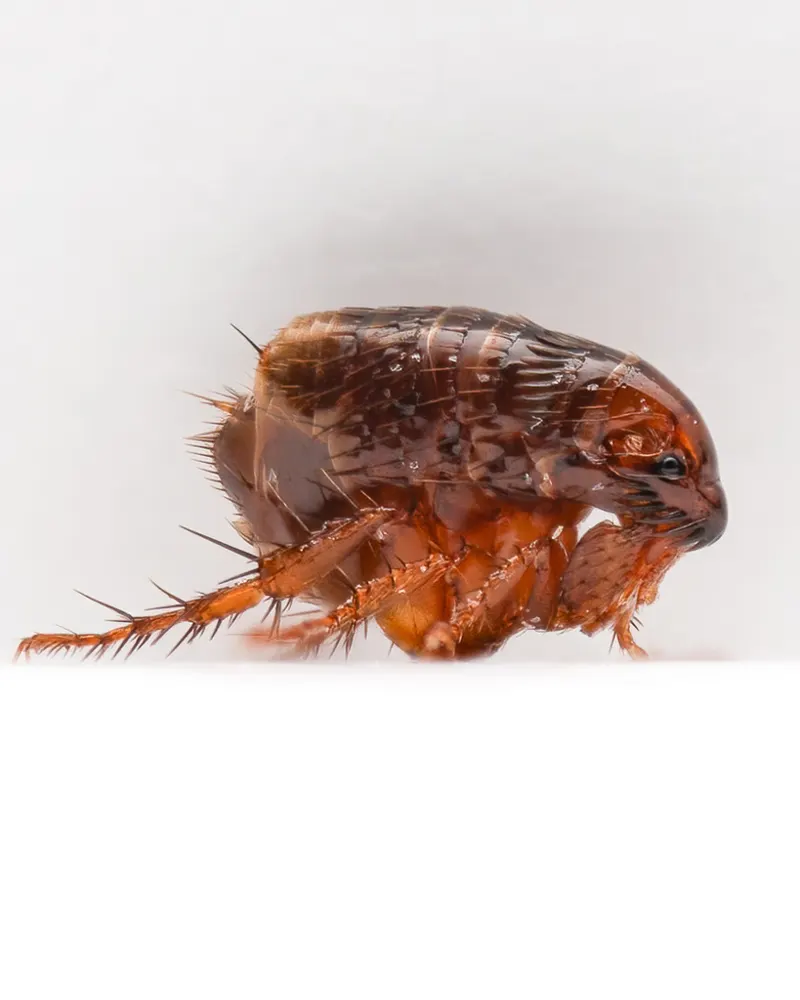
Check these features
- Tiny, wingless, dark reddish-brown to black insect
- Body flattened side to side, so it looks very thin from above
- Long back legs; jumps several inches when disturbed
- Row of comb-like spines on and near the head (seen with a magnifier)
- Tiny black specks of flea droppings (dried blood) in pet fur or bedding
Bites and stings
Flea bites usually show up as small, red, itchy spots, most often around the ankles and lower legs, sometimes with a tiny dot in the center. Some people react strongly and others not at all. Scratching can break the skin. Rarely, fleas spread murine typhus, which causes fever, aches and sometimes a rash within about two weeks; see a doctor for fever or a spreading, painful or infected-looking bite, and mention flea or animal contact. Call 911 for trouble breathing or swelling of the face or throat.
What to do
- Wash bites with soap and water and try not to scratch, since broken skin can get infected.
- Check pets with a flea comb and talk to your veterinarian about a flea treatment; treat all pets in the home, and never use dog products on cats unless the label says it is safe.
- Vacuum carpets, rugs, upholstered furniture, baseboards and pet resting spots often for several weeks, and empty the vacuum outside each time.
- Wash pet bedding and your bedding in soapy water.
- For a heavy problem that does not clear up, consider a pest professional. If you use any indoor product, follow the label.
Look-alikes
Why it came inside
Cat fleas live on cats, dogs and wild animals such as opossums, and lay eggs that fall into pet bedding, carpets and floor cracks. The young develop indoors, and new adults can wait in their cocoons for months, which is why people are often bitten after returning from a trip or moving into a home where pets lived.
Keep it out
- Keep pets on year-round flea prevention recommended by your veterinarian.
- Vacuum and wash pet bedding regularly.
- Keep opossums, raccoons and rodents away by sealing gaps under porches and sheds and storing pet food and trash in sealed containers.
- Avoid feeding or handling stray and wild animals.
What helps
Links go to Amazon search results so you can compare current options. As an Amazon Associate I earn from qualifying purchases. Always follow the product label.
Ask your vet which product fits your pet. Never use a dog product on a cat.
See options on AmazonLets you remove bugs, webs and egg sacs without touching them. Empty the bag or canister outside right away.
See options on AmazonSilicone or siliconized acrylic caulk closes cracks around windows, pipes and baseboards. Bigger gaps need foam backer rod or expanding foam first.
See options on AmazonA 10x magnifier makes small features easier to check, like eye patterns, markings or the shield on a tick.
See options on AmazonSources
Checked October 18, 2026. Rating backed by 3 sources. How we rate danger.