Eastern yellowjacket or European paper wasp?
These two get mixed up often. Both are rated Be careful, but they behave differently, so knowing which one you have still helps.
Why people mix them up
Both are black and yellow, about 1/2 inch long and active around houses all summer. The European paper wasp in particular has bright yellow markings that look a lot like a yellowjacket's.
Watch it fly and look at the nest. A paper wasp is slimmer, with long back legs dangling below it, and builds an open, umbrella-shaped comb under eaves. A yellowjacket is stockier, tucks its legs in, and nests in a hidden hole in the ground or a wall, with many wasps going in and out of one opening.
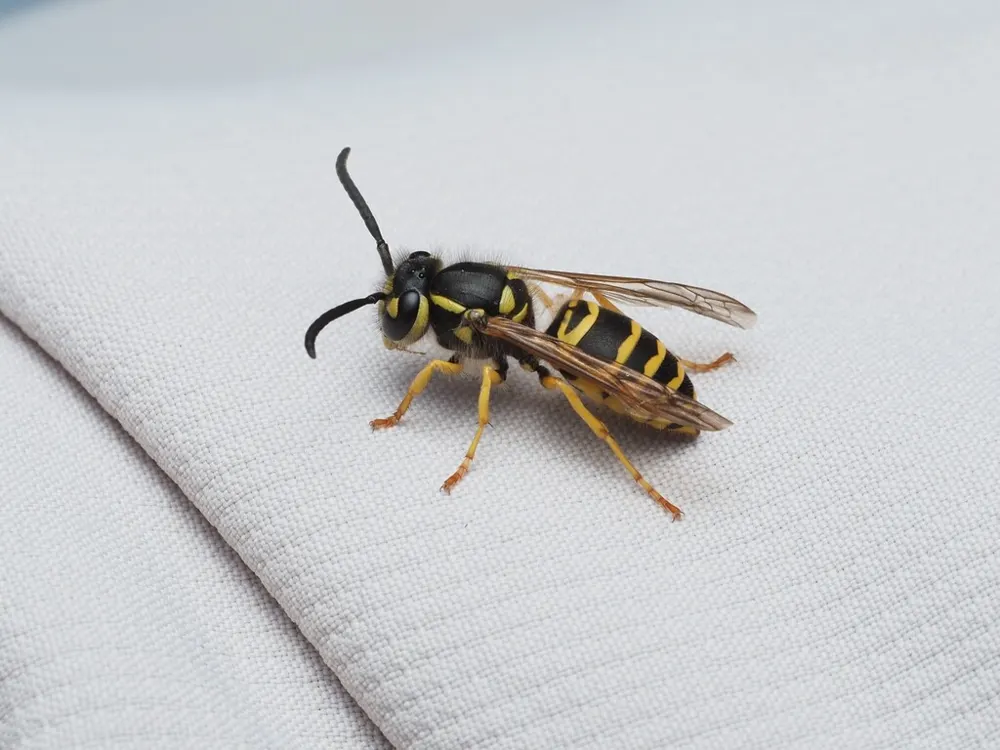
Eastern yellowjacket
Photo: meaningful_name, CC0, via iNaturalist
Size: Workers about 12 mm (1/2 inch); queens up to about 18 mm (2/3 inch)
- Bright yellow and black bands on a short, stocky body
- Wide black anchor-shaped mark on the top of the first abdominal segment, just behind the waist
- Smooth and shiny, much less hairy than a honey bee
- Holds its legs tucked up close to the body when flying
- Many wasps flying in and out of one small hole in the ground, a wall gap or under siding
Yellowjackets defend their nests hard and can sting many times, so stay back from any nest, and get emergency help if a sting causes trouble breathing or swelling of the face or throat.
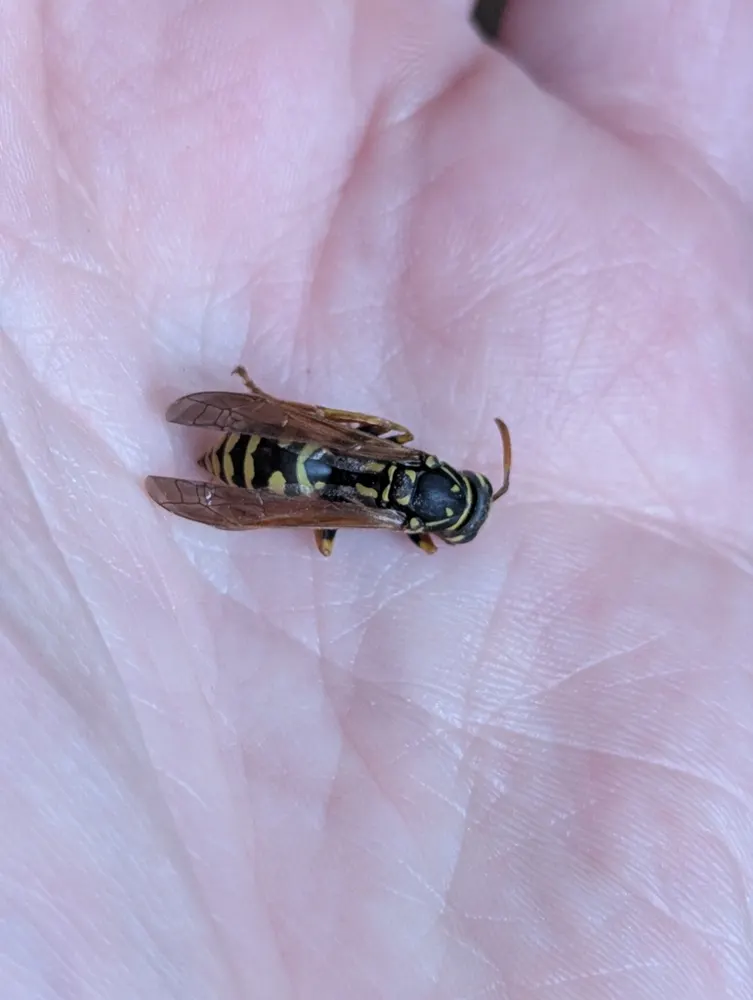
European paper wasp
Photo: Alexandria 'Alex' Wenninger, CC BY 4.0, via iNaturalist
Size: About 13 mm (1/2 inch) long for workers
- Black body with bright yellow bands and spots, easy to mistake for a yellowjacket
- Antennae are orange toward the tips
- Slim body with a thin, pinched waist
- Long hind legs that hang down below the body when it flies
- Nest is a single open comb of paper cells shaped like an upside-down umbrella, with no paper cover
It can sting if you bump its nest, and the sting hurts, but it is usually calm and only dangerous for people with a sting allergy.
How to tell them apart
- Paper wasps are slimmer with orange-tipped antennae, let their long legs dangle in flight, and build an open umbrella-shaped comb instead of a hidden, covered nest.
- Yellowjackets are stockier with all-black antennae, tuck their legs up in flight, and build covered nests in the ground or wall voids instead of an open comb.
Still not sure? Use the picker, and if a bite worries you, call Poison Help at 1-800-222-1222.