
German cockroach or American cockroach?
These two get mixed up often. Both are rated Be careful, but they behave differently, so knowing which one you have still helps.
Why people mix them up
Both are common, both are brown, and people tend to call any cockroach by one name. The difference matters because it tells you where they are coming from and how to deal with them.
Size and stripes. A German cockroach is about 1/2 inch, light tan, with two dark stripes behind the head, and lives indoors near kitchens and bathrooms. An American cockroach is thumb-sized, reddish brown, with a pale band around the shield, and often comes in from sewers, drains or outdoors.
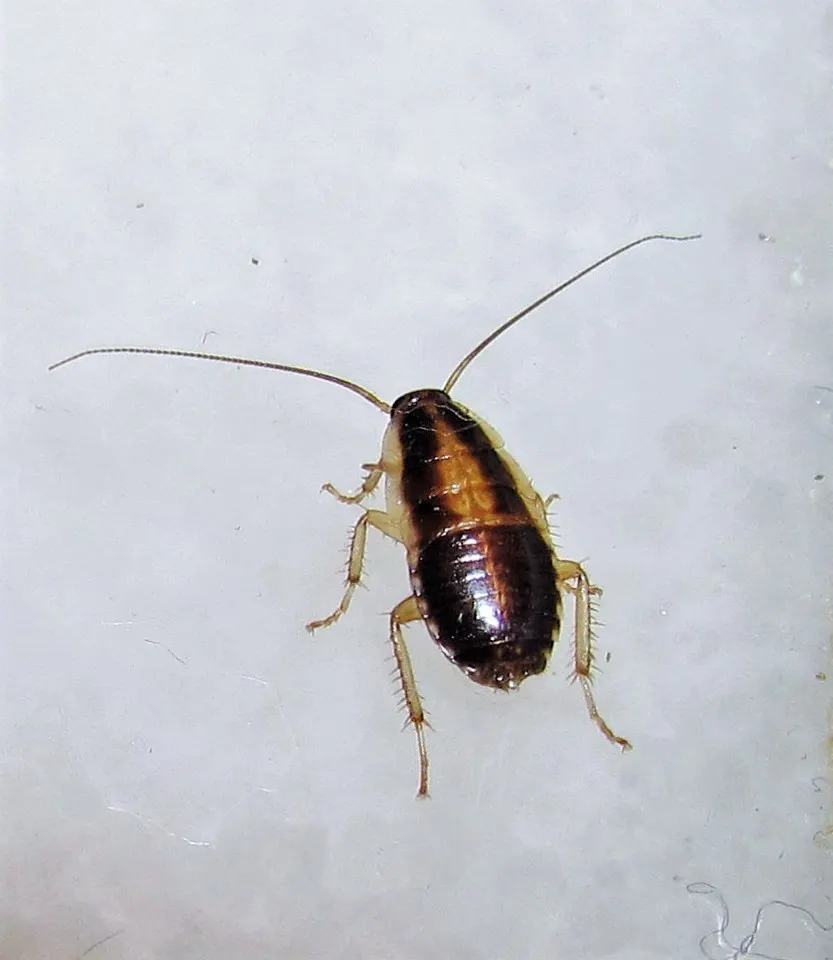
German cockroach
Photo: hhulsberg, CC0, via iNaturalist
Size: 13–16 mm (about 1/2 to 5/8 inch)
- Light tan to light brown body
- Two dark, parallel stripes running lengthwise on the shield just behind the head
- Wings cover the body but adults do not fly
- Young (nymphs) are smaller and darker with a pale stripe down the middle of the back
- Females often carry a light tan egg case sticking out of the rear end
German cockroaches do not bite, but their droppings and shed skins can set off allergies and asthma, and they can carry germs onto food and dishes.
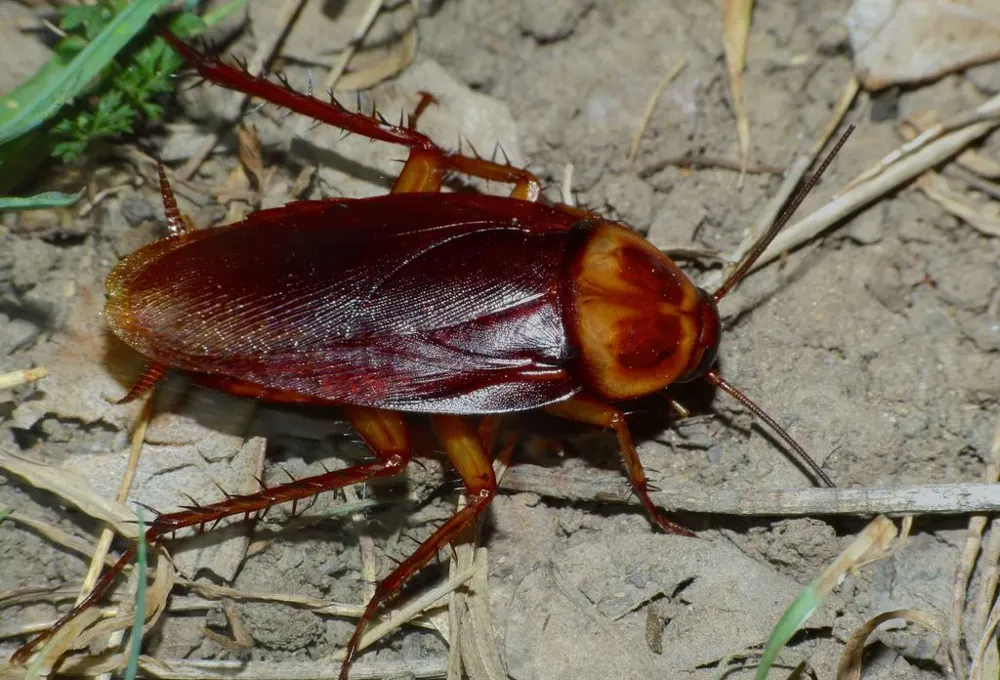
American cockroach
Photo: Steve Kerr, CC BY 4.0, via iNaturalist
Size: 34–53 mm (about 1 1/2 to 2 inches)
- The largest common house cockroach, about the length of a thumb
- Shiny reddish brown body
- Pale yellowish band around the edge of the shield behind the head
- Long wings that reach past the tip of the body in both males and females
- Rarely flies, but may glide or fly in hot, humid weather
American cockroaches do not bite, but they travel from sewers and drains and can carry germs onto food, and their droppings can worsen allergies and asthma.
How to tell them apart
- Three to four times longer, reddish brown, with a pale yellow rim around the shield behind the head instead of two dark stripes.
- German cockroaches are only about 1/2 inch long, tan, and have two dark stripes behind the head instead of a pale yellow rim.
Still not sure? Use the picker, and if a bite worries you, call Poison Help at 1-800-222-1222.