
Blacklegged tick or American dog tick?
These two get mixed up often. Both are rated Get advice, but they behave differently, so knowing which one you have still helps.
Why people mix them up
Both are small, flat, reddish-brown ticks found on people and pets after time outdoors, often in the same yards. A blacklegged (deer) tick nymph is so small that people miss it, and an adult can look like a small dog tick at a glance.
Check the shield behind the head. The American dog tick has whitish or gray mottled markings and short mouthparts. The blacklegged tick has a plain dark shield, no white markings, and long mouthparts. Save the tick in a sealed bag or tape it to paper if you may want to show a doctor.
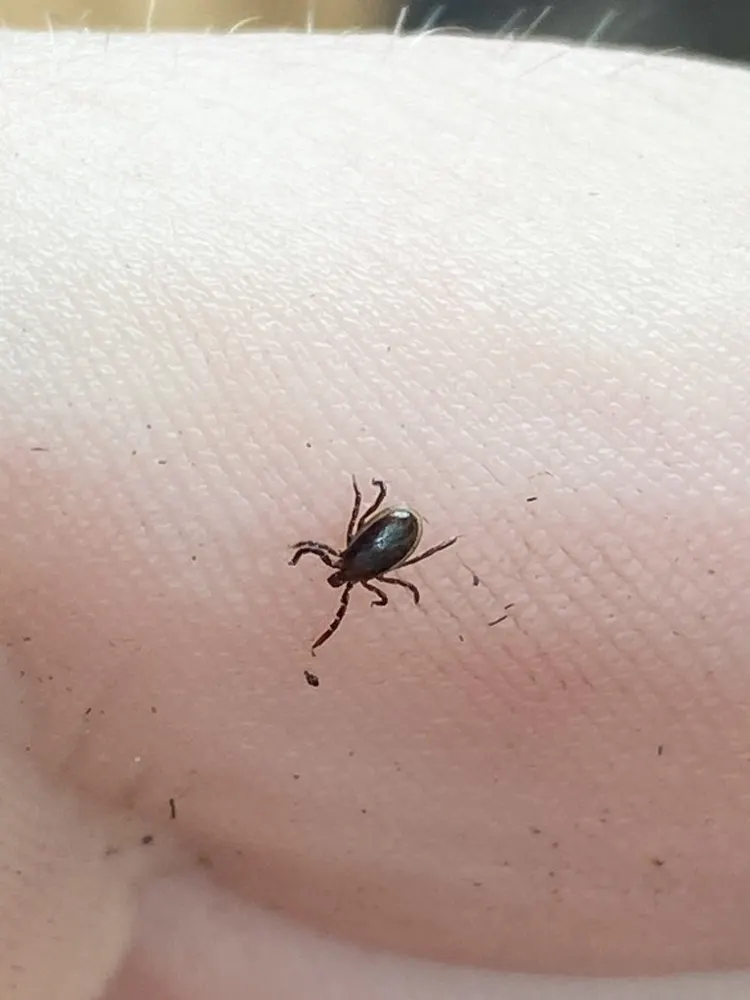
Blacklegged tick
Photo: Hayes Valentine, CC BY 4.0, via iNaturalist
Size: Unfed adults about 2–3 mm (roughly 1/10 inch, sesame-seed size); nymphs about 1.5 mm (poppy-seed size); larvae under 1 mm. A fed female can swell to 6 mm or more (about 1/4 inch or larger).
- Very small, flat, teardrop-shaped body with eight dark legs (six on larvae)
- Adult female has an orange-red rear body with a solid dark brown or black shield behind the head
- Adult male is dark brown all over, with the shield covering the whole back
- No white or silver markings on the shield
- Long, forward-pointing mouthparts visible from above
This tick can spread Lyme disease and several other serious infections, so remove it promptly and watch for rash or fever in the weeks after a bite.
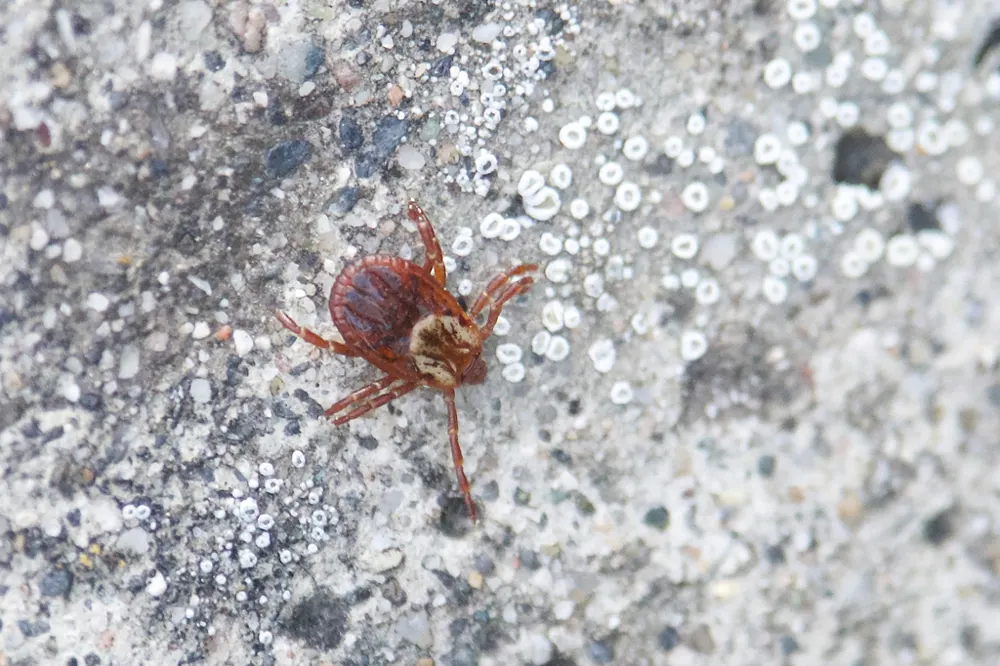
American dog tick
Photo: Owen Strickland, CC BY 4.0, via iNaturalist
Size: Unfed adult female about 5–6 mm (about 1/5 to 1/4 inch); male about 3.5 mm (about 1/8 inch). A fed female can swell to about 13–15 mm (about 1/2 inch or more). Larvae and nymphs are under 1 mm.
- Flat, oval, reddish-brown body with eight legs
- Whitish, cream or gray mottled markings on the shield behind the head (female) or across the whole back (male)
- Short mouthparts, much shorter than a blacklegged tick's
- Fed females swell into a gray, bean-shaped body up to about 1/2 inch long
This common tick can spread Rocky Mountain spotted fever and tularemia, so remove it promptly and watch for fever or rash after a bite.
How to tell them apart
- The dog tick is larger and has whitish or grayish mottling on its shield; the blacklegged tick's shield is plain dark brown or black.
Still not sure? Use the picker, and if a bite worries you, call Poison Help at 1-800-222-1222.