
Hobo spider or giant house spider?
These two get mixed up often. The hobo spider is rated Be careful and the giant house spider is rated Harmless, so it is worth a closer look.
Why people mix them up
These two are close relatives in the same genus. Both are brown, fast and build funnel webs, both are found in the Pacific Northwest, and both wander indoors in late summer. Even experts often need a microscope to separate them.
Size helps: a giant house spider is usually bigger, with legs spanning up to about 4 inches. Pattern helps less than people think. If you can't tell, treat it the same way either way: move it outside with a cup and seal gaps near the floor.
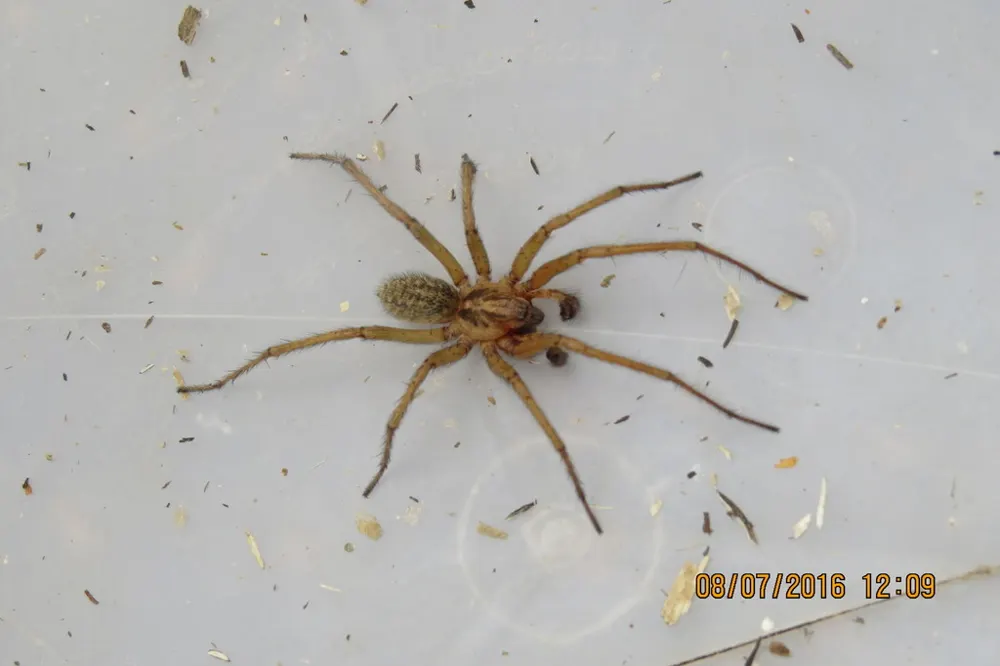
Hobo spider
Photo: swells, CC0, via iNaturalist
Size: Females about 9.5–16.5 mm (3/8 to 5/8 inch) body length; males about 7–13.5 mm (1/4 to 1/2 inch); about 1 to 1.75 inches with legs
- Brown, hairy-looking spider with a brown front body marked by darker bands
- Plain brown legs without dark rings or bands
- Gray abdomen with a pale yellowish chevron (herringbone) pattern down the middle
- Males have two swollen, boxing-glove-like palps near the face
- Builds a flat sheet web leading into a funnel, usually hidden in cracks, woodpiles or under objects near the ground
Hobo spiders were long blamed for flesh-damaging bites, but current research does not support that; a rare defensive bite usually causes only mild pain and redness.
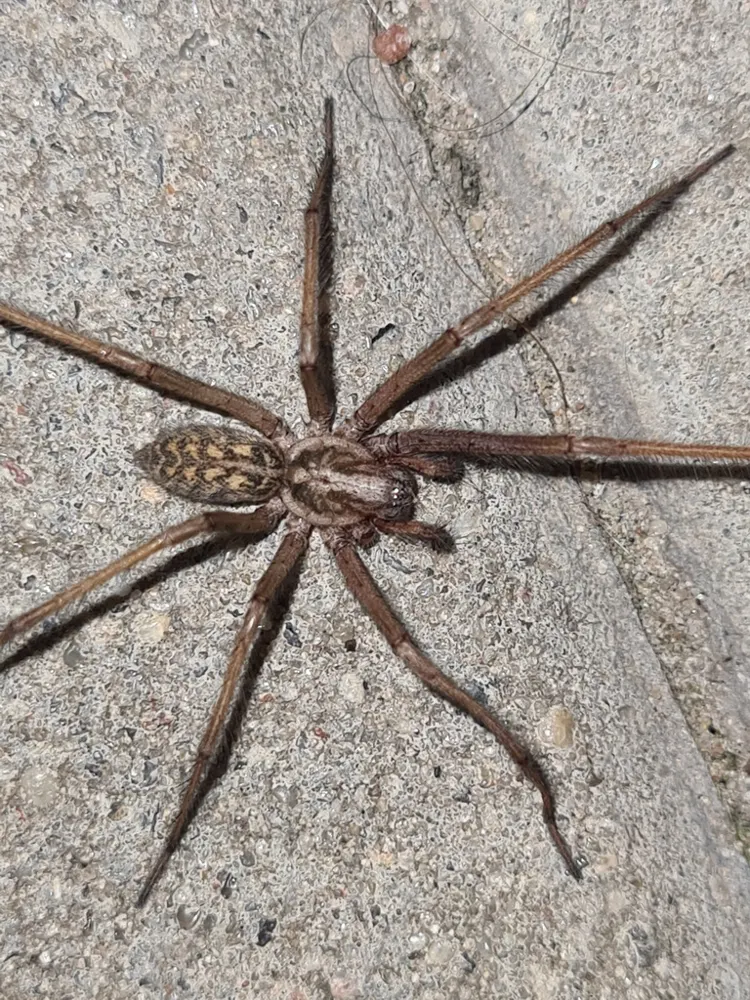
Giant house spider
Photo: Marcin Jasiński, CC BY 4.0, via iNaturalist
Size: Body about 13–18 mm (1/2 to 3/4 inch), sometimes up to about 25 mm (1 inch); leg span up to about 100 mm (4 inches) in large adults
- Large brown to grayish-brown spider with a somewhat hairy, dull (not shiny) body
- Very long legs relative to the body; runs extremely fast across floors
- Faint pale pattern down the abdomen, though markings vary a lot
- Builds a flat sheet web with a funnel retreat in dark corners, wood piles or gaps in brick and stone
- Often found on the floor or stuck in a sink or bathtub
Big, fast and startling, but not a threat to people; it runs away rather than bites.
How to tell them apart
- Usually larger and longer-legged, often with faint leg banding; in the Puget Sound area it is far more common than the hobo spider. Only a microscope check of the palps or reproductive parts is certain.
- Very similar but usually smaller (body about 8–14 mm); in western Washington the giant house spider is far more common. Only an expert with a microscope can be sure.
Still not sure? Use the picker, and if a bite worries you, call Poison Help at 1-800-222-1222.